
Understanding the Many Forms of Lord Shiva
Bhagwan Shiv Ke Vibhinn Swaroop Lord Shiva is one of the most profound and multi-dimensional deities in Sanatan Dharma. He is known as Mahadev, the Great God, yet He appears in many different forms, each carrying a unique meaning and spiritual message. The phrase Bhagwan Shiv Ke Vibhinn Swaroop refers to these various forms of Lord Shiva that devotees worship and meditate upon.
This article explains the most important forms of Bhagwan Shiv in simple and clear English. It is written to help readers understand the deeper significance of each form and how they guide the spiritual seeker on the path of strength, wisdom, and liberation.
The Infinite Nature of Lord Shiva
Lord Shiva is beyond any single form or description. The scriptures say that He is both Nirguna (without attributes) and Saguna (with attributes). Out of compassion for devotees, He manifests in different forms so that seekers at various levels of understanding can connect with Him. Bhagwan Shiv Ke Vibhinn Swaroop
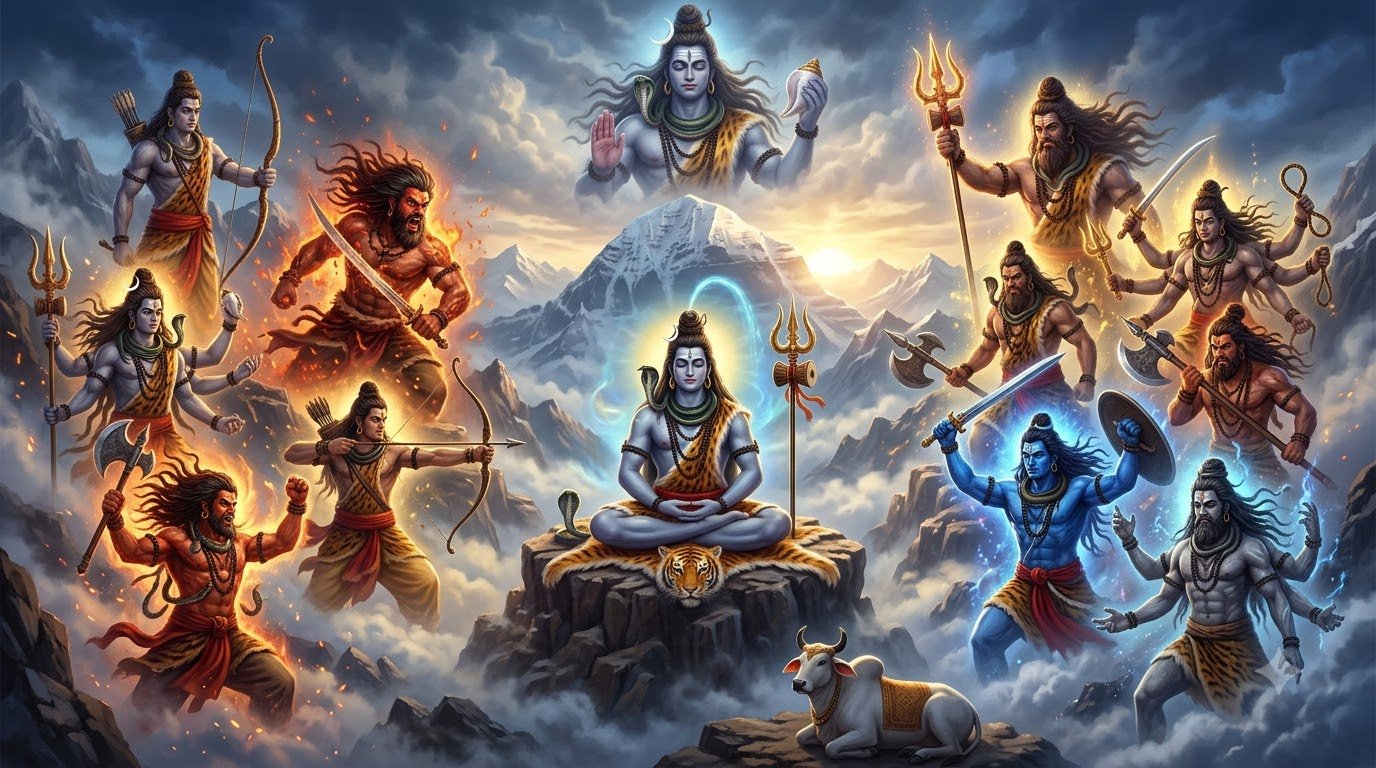
Each form of Shiva highlights a particular aspect of the supreme reality — peace, destruction of evil, divine dance, knowledge, or fierce protection. By understanding these forms, a devotee gains a more complete vision of Mahadev.
1. Mahadev – The Supreme Lord
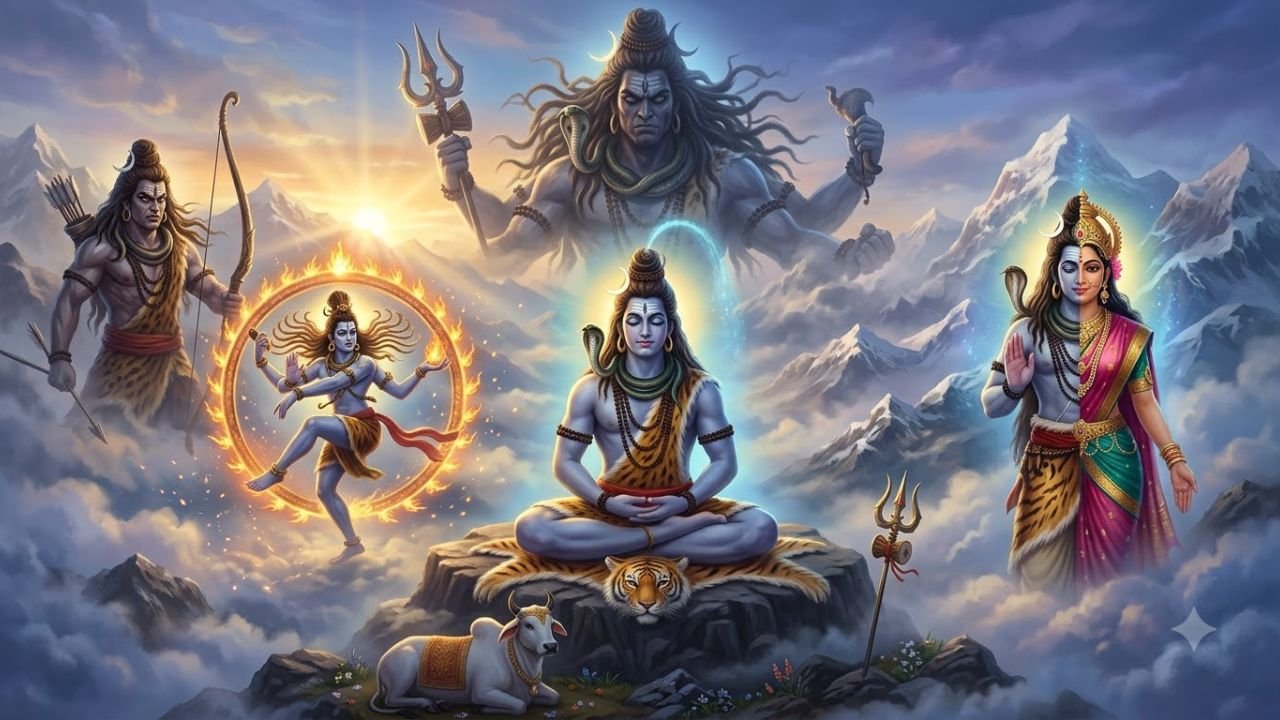
The most commonly worshipped form is Mahadev. In this form, Lord Shiva is shown seated in deep meditation on Mount Kailash, with ash on His body, a crescent moon on His head, the river Ganga flowing from His matted hair, and a serpent around His neck.
This form represents:
- Pure consciousness and stillness
- Detachment from the material world
- Infinite compassion for all beings
- The state of perfect meditation
When devotees call out “Har Har Mahadev,” they are calling upon this all-powerful yet deeply compassionate form of Shiva.
2. Rudra – The Fierce Protector
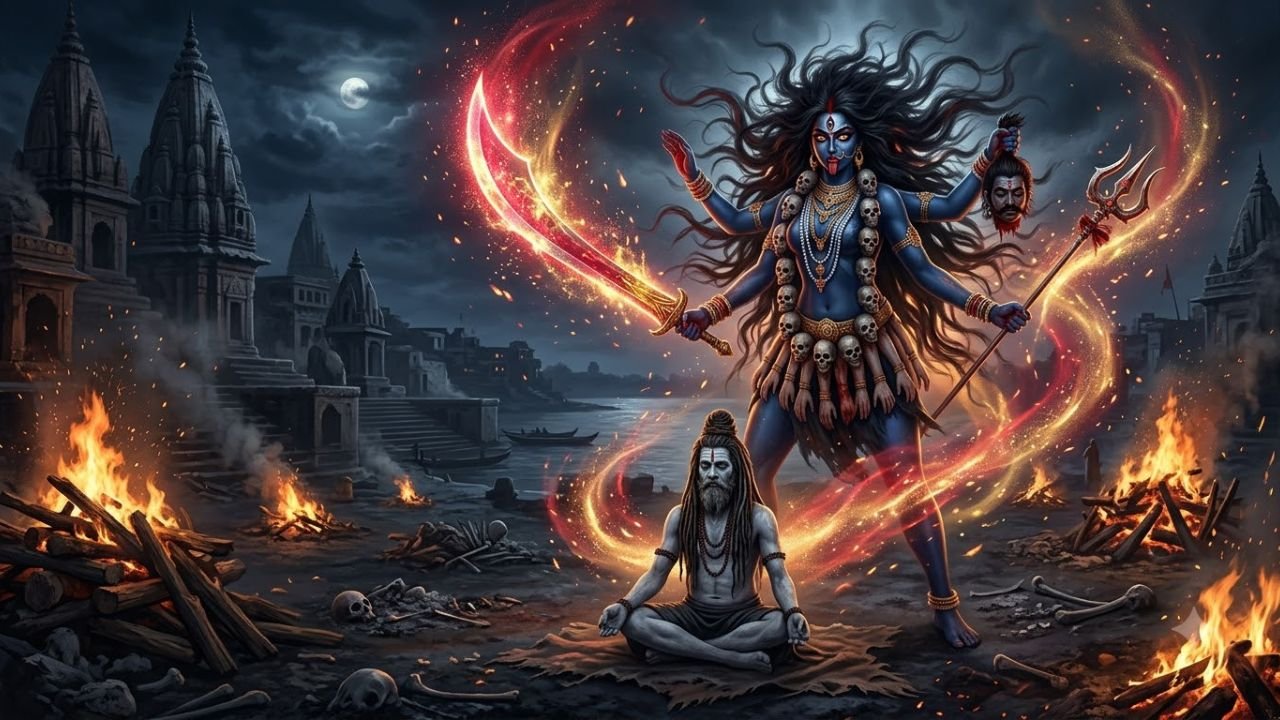
Rudra is the fierce and powerful form of Lord Shiva. The word Rudra is often linked with the one who makes evil forces cry or the one who destroys suffering. In the Vedas, Rudra is praised as a mighty deity who can both punish and protect. Bhagwan Shiv Ke Vibhinn Swaroop
This form represents:
- Destruction of negative forces
- Strong protection for devotees
- The power to remove deep-rooted suffering
- Fierce justice
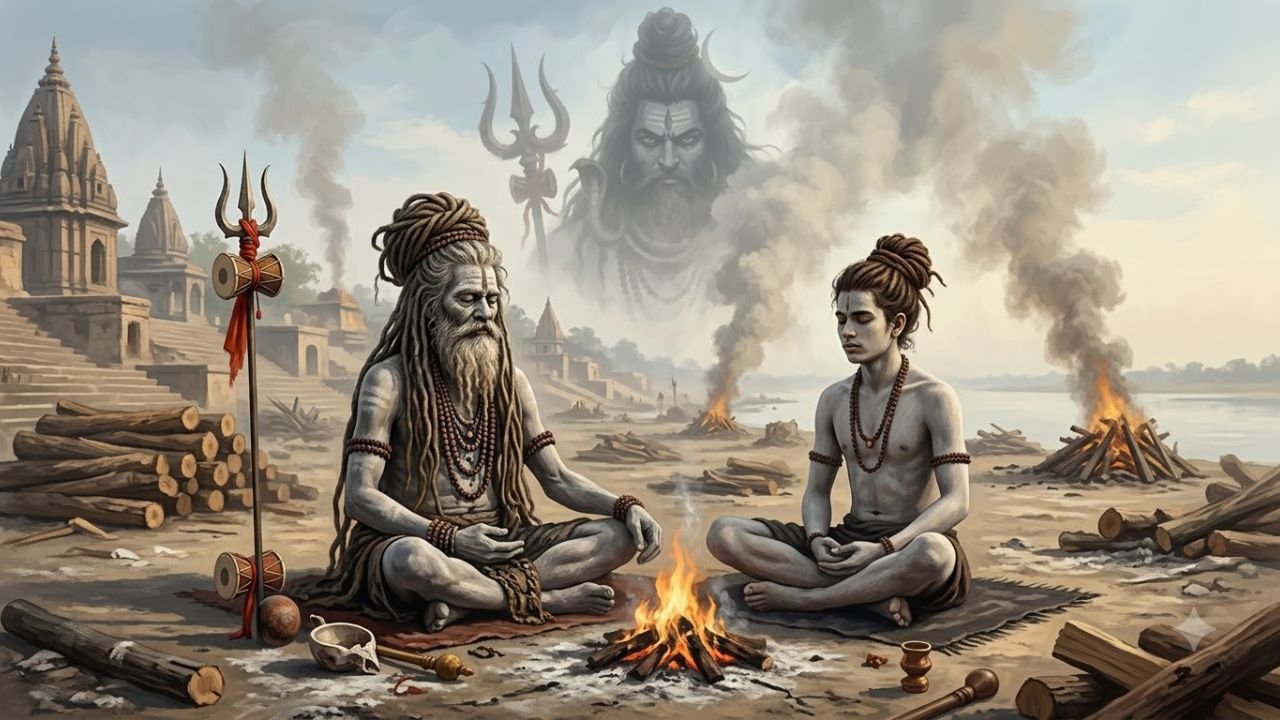
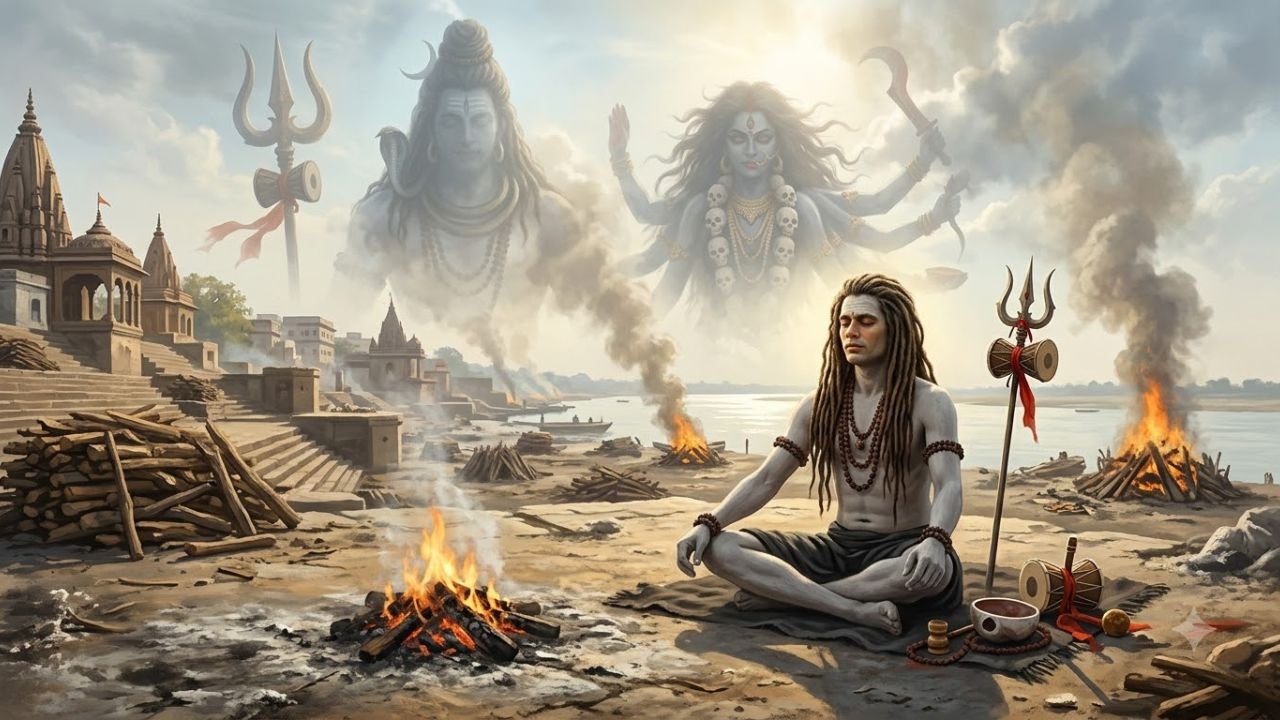
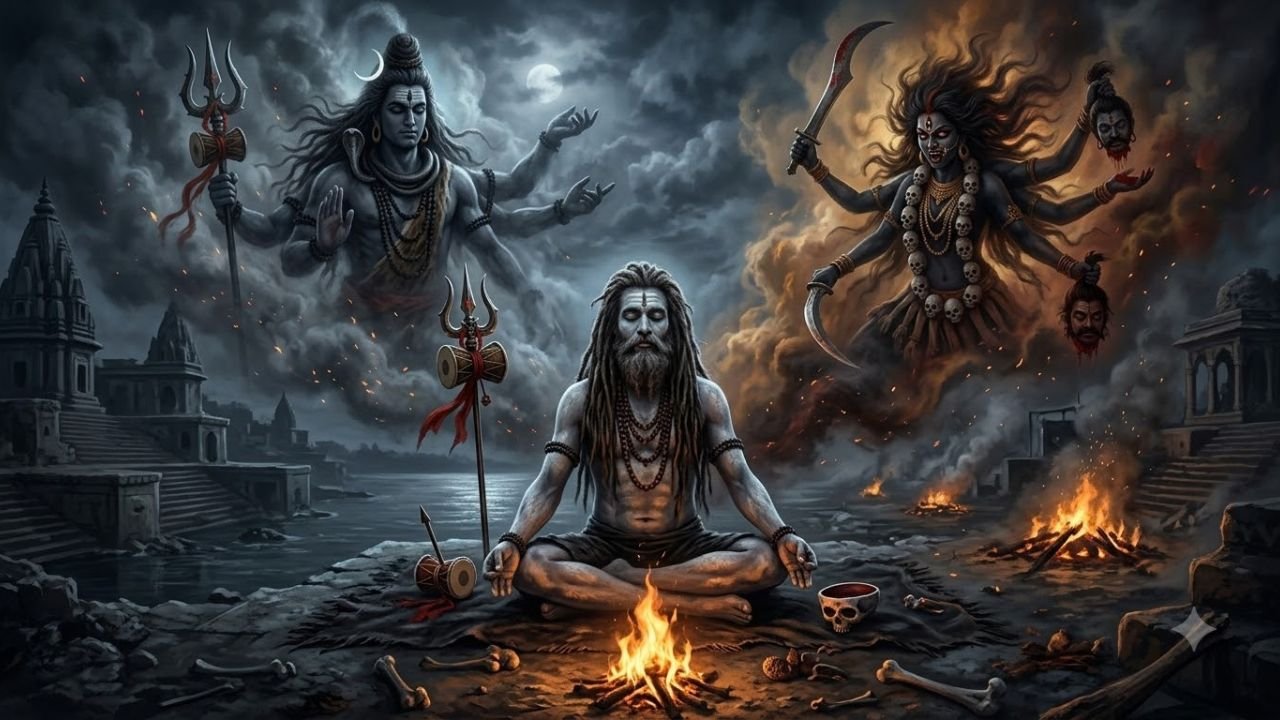
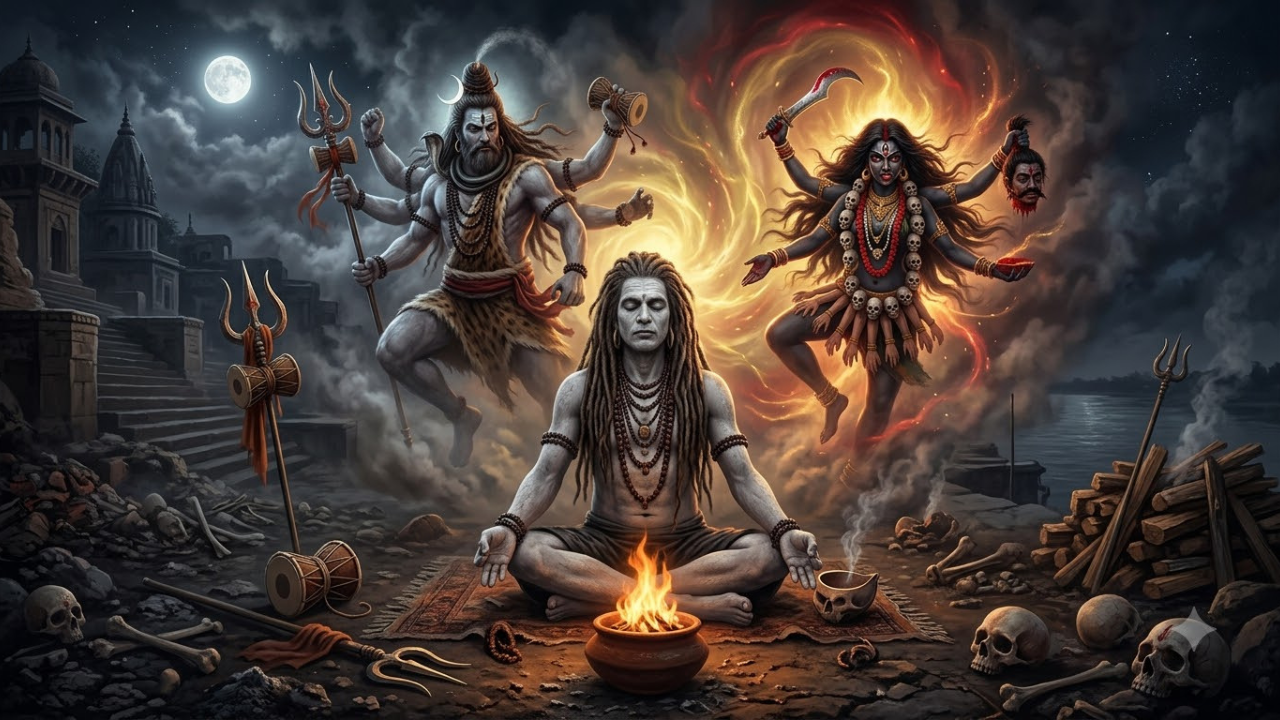
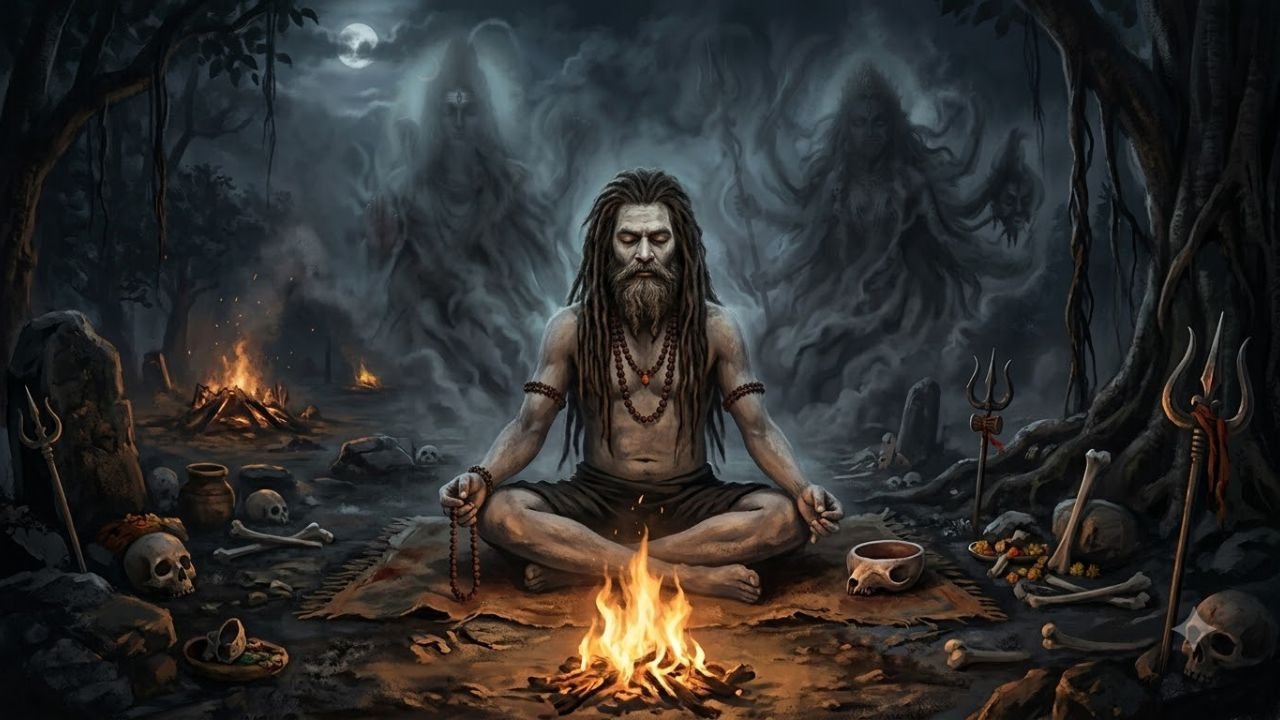
In the Aghori and Tantric traditions, Rudra holds special importance because He embodies the energy required to face and destroy inner and outer darkness.
3. Mahakal – The Lord of Time
Mahakal is one of the most intense forms of Lord Shiva. He is the master of time itself. While everything in the universe is bound by time, Mahakal stands beyond it.
This form represents:
- The power that controls birth, life, and death
- Complete fearlessness
- The destruction of the fear of death
- Ultimate protection from untimely dangers
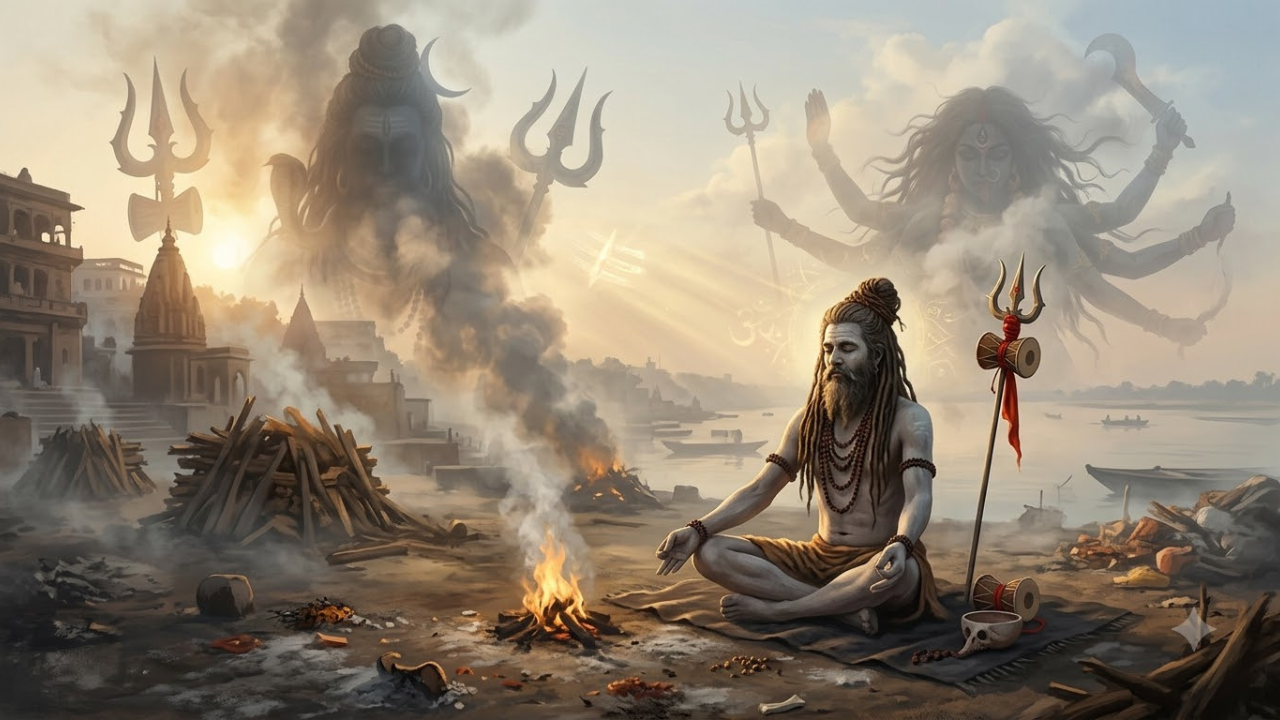
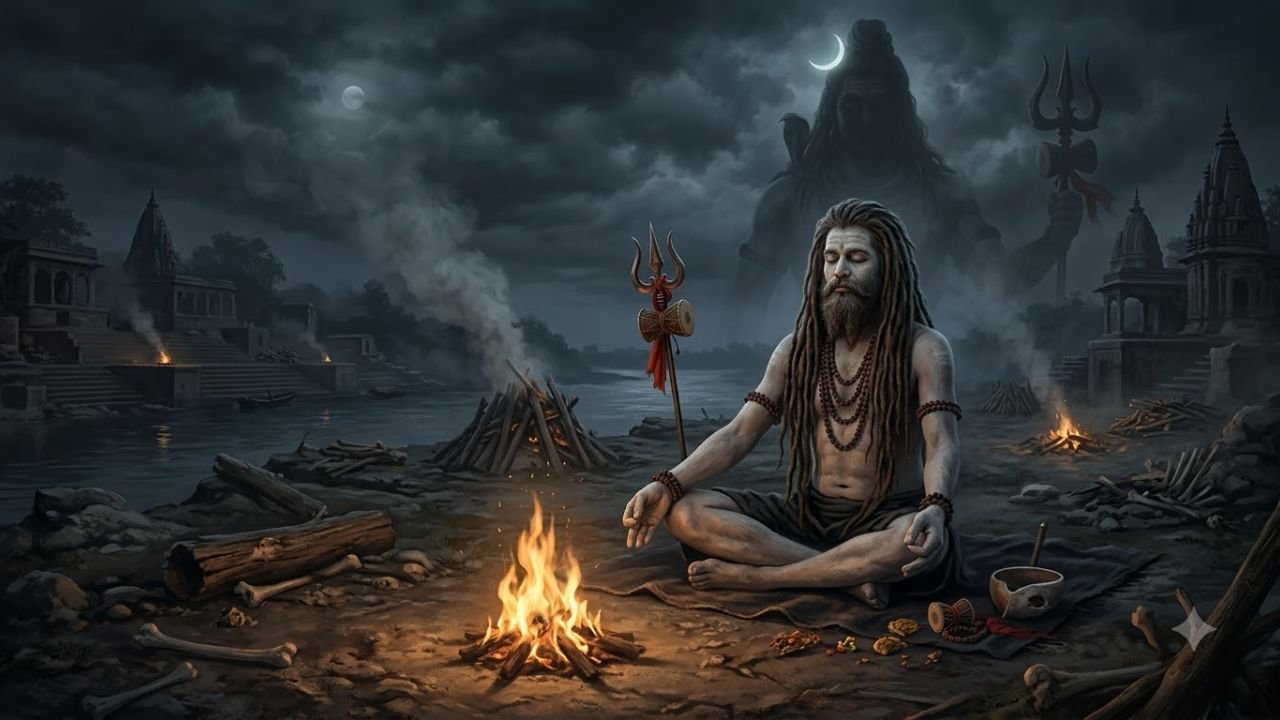
Mahakal is closely associated with the cremation ground and is highly revered in the Aghori tradition. Devotees believe that sincere worship of Mahakal grants courage and removes the deep fear of mortality. Bhagwan Shiv Ke Vibhinn Swaroop
4. Nataraja – The Cosmic Dancer
In the form of Nataraja, Lord Shiva is shown performing the Tandava, the cosmic dance. One leg is raised, the other presses down on a demon representing ignorance, while His hands hold the drum of creation and the fire of destruction.
This form represents:
- The continuous cycle of creation, preservation, and destruction
- The rhythm of the universe
- Mastery over movement and stillness
- Liberation through divine rhythm
Nataraja is especially worshipped in South India and is a powerful symbol of cosmic balance.
5. Ardhanarishvara – The Union of Shiva and Shakti
In the Ardhanarishvara form, Lord Shiva appears as half-male and half-female — the left side being Goddess Parvati (Shakti) and the right side being Shiva. Bhagwan Shiv Ke Vibhinn Swaroop
This form represents:
- The perfect union of consciousness and energy
- Equality and balance between masculine and feminine principles
- The truth that Shiva and Shakti are inseparable
- Completeness of the Divine
Ardhanarishvara teaches that real spiritual progress comes from the harmony of stillness and dynamic power.
6. Dakshinamurthy – The Guru of Knowledge
In the form of Dakshinamurthy, Lord Shiva appears as the silent teacher of supreme knowledge. He is shown sitting under a banyan tree, facing south, and teaching through silence. Bhagwan Shiv Ke Vibhinn Swaroop
This form represents:
- The highest spiritual knowledge
- The tradition of the Guru
- Teaching beyond words
- Inner awakening through silence
Dakshinamurthy is especially worshipped by those seeking wisdom and self-realisation.
7. Bhairava – The Fierce Guardian
Bhairava is a powerful and protective form of Lord Shiva. He is often shown with a fierce expression, carrying weapons, and accompanied by a dog.
This form represents:
- Destruction of evil and negative forces
- Strong protection of sacred places and devotees
- Mastery over fear and time
- The guardian aspect of Shiva
There are 64 Bhairavas mentioned in Tantric texts, with Kaal Bhairava being one of the most widely worshipped.
8. Aghora – The Form Beyond Fear
The Aghora form of Lord Shiva is closely connected with the Aghori tradition. Aghora means that which is not terrifying — the state beyond dualities of pure and impure, good and bad. Bhagwan Shiv Ke Vibhinn Swaroop
This form represents:
- Transcendence of all fear
- Acceptance of every aspect of existence
- The highest non-dual understanding
- Complete inner freedom
Aghori practitioners regard this form as the ultimate ideal of spiritual realisation.
Other Important Forms of Lord Shiva
Apart from the major forms mentioned above, Lord Shiva also appears as:
- Pashupati – Lord of all living beings
- Somnath – Lord of the moon and healer
- Mrityunjaya – The conqueror of death
- Vishwanath – Lord of the universe
- Kailashnath – Lord of Mount Kailash
Each of these forms carries a specific blessing and message for devotees.
The Spiritual Message Behind Multiple Forms
The different forms of Bhagwan Shiv are not separate gods. They are different expressions of the same infinite reality. Just as water can appear as ice, liquid, or vapour, the same supreme consciousness appears in different forms according to the need of the devotee and the purpose of the manifestation. Bhagwan Shiv Ke Vibhinn Swaroop
By meditating on these forms, a seeker can develop different qualities — peace from Mahadev, courage from Rudra and Mahakal, balance from Ardhanarishvara, and wisdom from Dakshinamurthy.
Conclusion: Connecting with the Infinite Shiva
Bhagwan Shiv Ke Vibhinn Swaroop show us the vastness and depth of Lord Shiva’s nature. From the peaceful meditating Mahadev to the fierce Mahakal and the graceful Nataraja, every form is a doorway to the same eternal truth.
A devotee does not need to worship all forms at once. Sincere devotion to any one form of Shiva, performed with faith and purity of heart, can lead to divine grace and inner transformation.
If you wish to understand the deeper spiritual science of Lord Shiva’s forms, the Aghori path, or the protective aspects of Mahakal and Rudra under authentic guidance, you can connect for clear and responsible direction. Bhagwan Shiv Ke Vibhinn Swaroop
Aghori Rudra Maharaj
📞 Call / WhatsApp: +91-7357771057
📧 Email: info@aghorirudramaharaj.info
🌐 Website: https://www.aghorirudramaharaj.info/
May the blessings of all forms of Bhagwan Shiv fill your life with strength, fearlessness, wisdom, and lasting peace. Har Har Mahadev! Bhagwan Shiv Ke Vibhinn Swaroop

Leave a Reply