
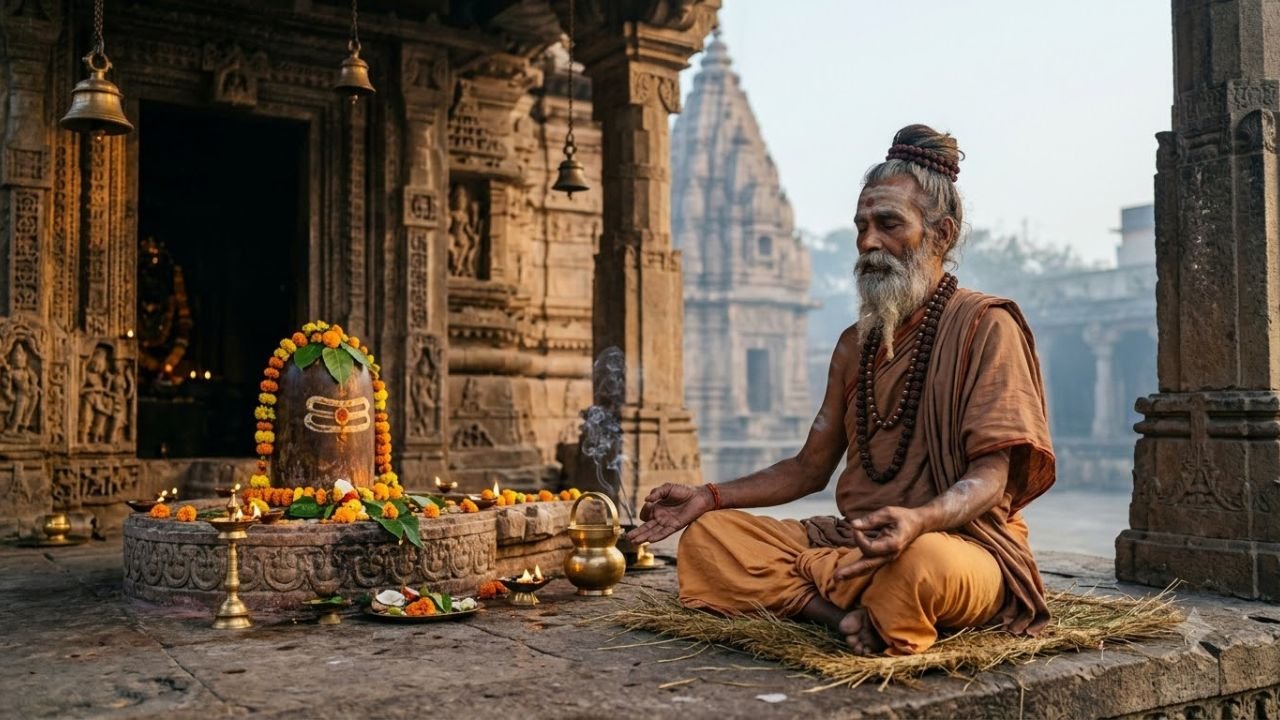
Understanding the True Meaning of Aghor Sadhana
Aghor Sadhana Ka Asli Arth is a subject that creates a lot of curiosity among people interested in Indian spirituality, Tantra, meditation, Shiva worship, and spiritual practices.
When people hear the word Aghor, they may immediately imagine cremation grounds, ash-covered ascetics, unusual rituals, or mysterious Tantric practices. These images have become popular through stories, films, television, and social media.
However, Aghor is much deeper than its external appearance.
Aghor Sadhana Ka Asli Arth The word Aghor is traditionally associated with a state beyond fear, aversion, and rigid distinctions. Within Aghor-oriented spiritual thought, the seeker attempts to develop a different relationship with life, death, purity, impurity, attachment, and fear.
The Aghori Rudra Maharaj website also describes Aghor Tantra as a subject that is frequently misunderstood and discusses it alongside spiritual practice, Tantra, Mantra, and Sadhana.
This article explains the meaning of Aghor Sadhana in simple English and explores its spiritual purpose, principles, Guru guidance, misconceptions, and place within Indian spiritual traditions. Aghor Sadhana Ka Asli Arth
What Does Aghor Mean?
The word Aghor is commonly understood in relation to the idea of being free from ghor—fear, dread, or an intense sense of aversion. Aghor Sadhana Ka Asli Arth
In a spiritual context, Aghor can be understood as an approach that seeks to move beyond unnecessary fear and dualistic thinking.
For example, ordinary human thinking often creates strong divisions:
- Pure and impure
- Beautiful and ugly
- Pleasant and unpleasant
- Life and death
- Acceptable and unacceptable
- Attraction and rejection
Aghor-oriented thought explores what happens when a seeker learns to face such opposites without being controlled by fear or hatred.
This does not mean that every Aghori practice is identical, nor does it mean that every unusual ritual associated with Aghor represents the entire tradition. Aghor Sadhana Ka Asli Arth
What Is Aghor Sadhana?
Aghor Sadhana refers broadly to spiritual practices associated with the Aghor tradition.
Sadhana means disciplined spiritual practice. Depending on the lineage and teacher, spiritual practices can involve:
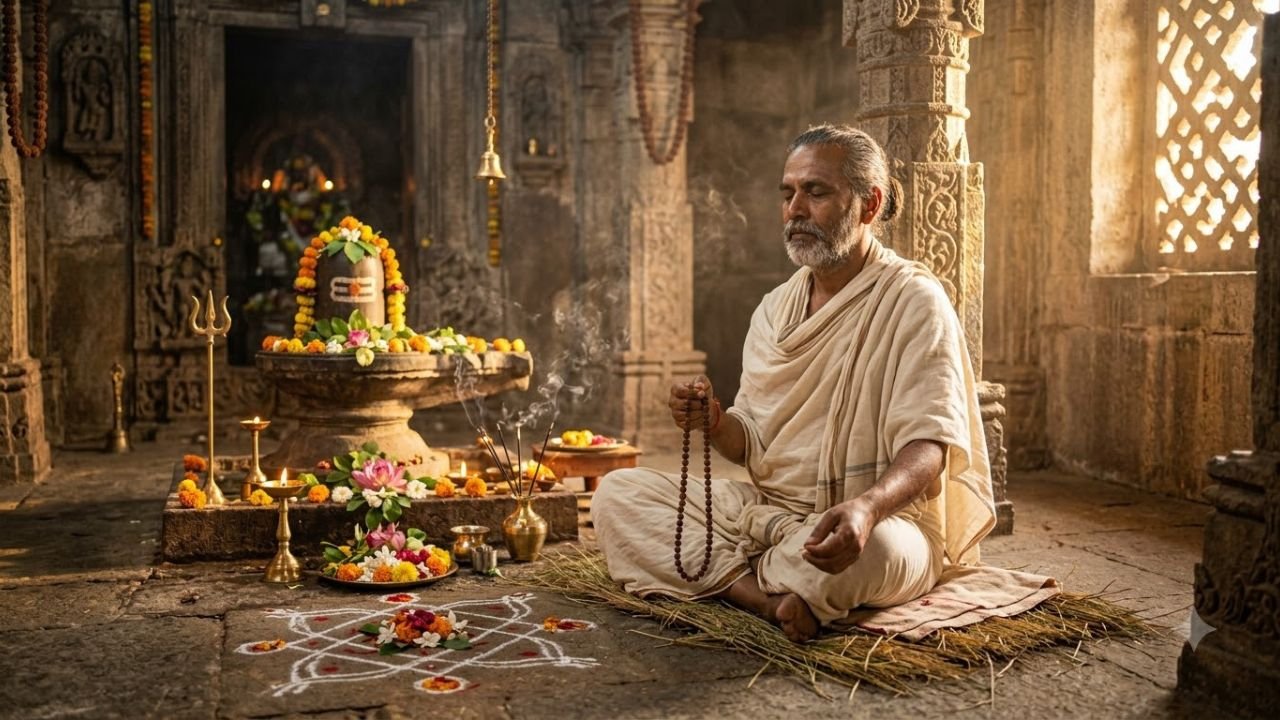
- Meditation
- Mantra
- Shiva worship
- Guru Bhakti
- Self-observation
- Detachment
- Contemplation
- Ritual practice
- Spiritual discipline
The exact methods can differ significantly between practitioners and lineages.
Therefore, there is no single technique that can accurately represent all forms of Aghor Sadhana.
The Deeper Purpose of Aghor Sadhana
At a deeper level, Aghor Sadhana can be understood as a journey of confronting fear, attachment, ego, and rigid judgments.
Instead of constantly running away from uncomfortable realities, the practitioner develops awareness and inner steadiness.
This is one reason that fearlessness is an important concept when discussing Aghor.
Aghor Sadhana Ka Asli Arth Kya Hai?
The deeper meaning can be understood through several principles.
1. Freedom From Fear
Fear influences many human decisions.
People fear:
- Death
- Loss
- Failure
- Social rejection
- Uncertainty
- Change
- The unknown
Aghor philosophy is often associated with confronting such fears rather than allowing them to completely control one’s mind.
The goal is not to behave recklessly.
Instead, the spiritual idea is to develop awareness and inner stability in the presence of fear.
Fearlessness Does Not Mean Carelessness
A person who is spiritually fearless does not necessarily ignore danger.
There is an important difference between:
Fearlessness and recklessness.
A responsible spiritual practitioner can recognize real-world risks while working on unnecessary psychological fear.
2. Understanding Life and Death
Death is one of the most powerful subjects associated with Aghor.
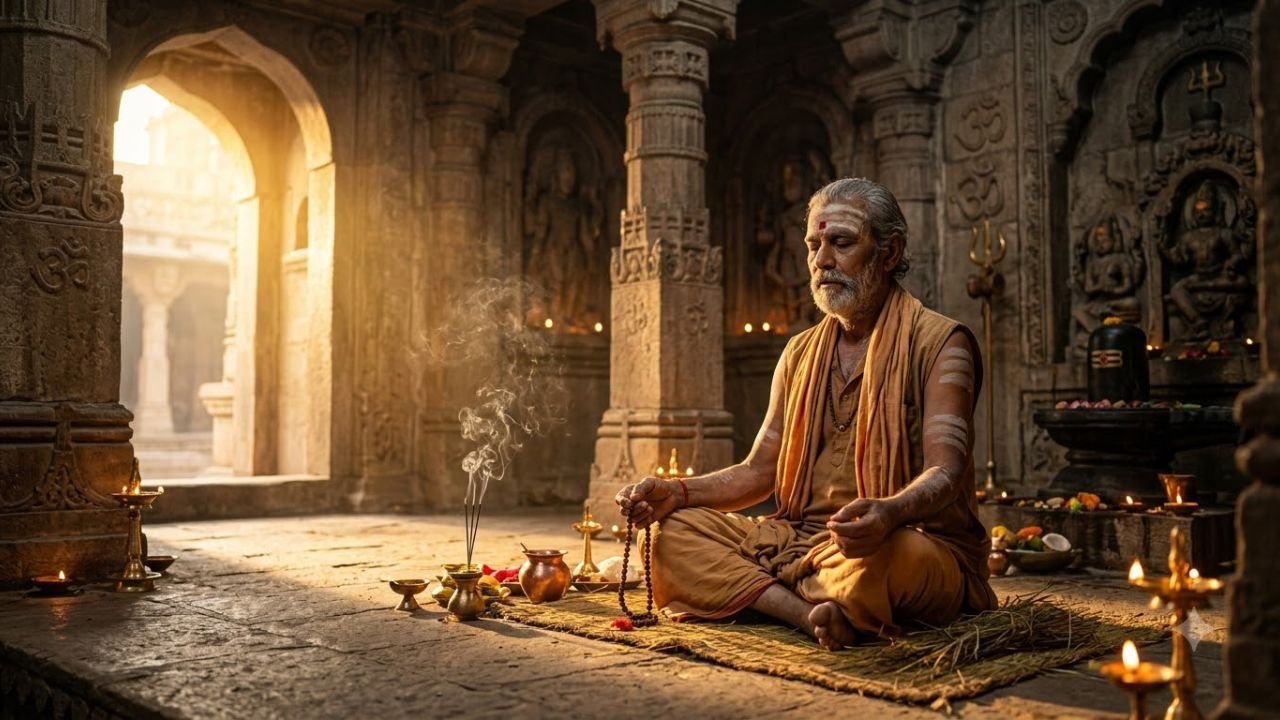
Cremation grounds are often mentioned when discussing Aghori traditions because they are traditionally connected with contemplation of impermanence and death. Aghor Sadhana Ka Asli Arth
From a spiritual perspective, contemplation of death can remind a person that:
- Life is temporary
- The body is impermanent
- Possessions do not last forever
- Ego is not permanent
- Attachment can create suffering
The purpose of such contemplation is not simply to create fear or shock.
It can encourage a deeper understanding of impermanence.
3. Moving Beyond Social Judgments
Human beings naturally classify things as good, bad, clean, dirty, attractive, or unattractive.
Some Aghor-oriented teachings challenge rigid forms of aversion.
This does not necessarily mean that normal social or ethical rules should simply be ignored.
Rather, the spiritual question can be:
Why does the mind react so strongly to certain things?
By observing these reactions, a seeker may learn more about fear, attachment, conditioning, and ego.
4. Detachment From the Ego
Ego can become an obstacle in any spiritual practice.
A person may begin thinking:
“I am more spiritual than everyone else.”
This can happen even when someone is performing meditation, mantra, or religious practices.
Aghor Sadhana can be understood as challenging this kind of spiritual pride.
The deeper aim is not to create a dramatic spiritual identity.
It is to develop greater awareness and reduce unnecessary attachment to the ego.
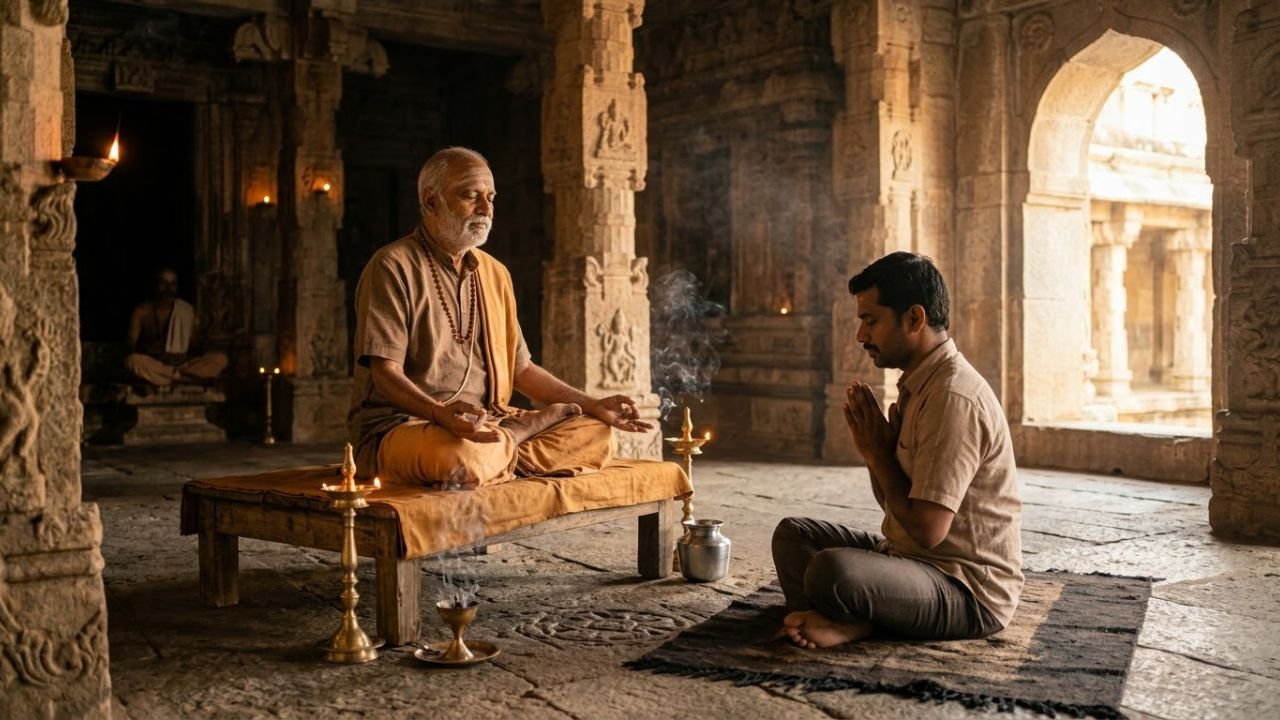
5. Guru Guidance
Guru guidance has traditionally been important in many Indian spiritual paths, including specialized forms of Tantra and Aghor Sadhana. Aghor Sadhana Ka Asli Arth
A Guru may provide instruction regarding:
- Spiritual discipline
- Meditation
- Mantra
- Traditional practices
- Conduct
- Interpretation of experiences
- Appropriate stages of practice
This is especially important because advanced spiritual practices should not simply be copied from social media, videos, or random websites.
The Aghori Rudra Maharaj website also places related subjects such as Tantra, Mantra and Sadhana within its broader spiritual content. Aghor Sadhana Ka Asli Arth
Why Guru Guidance Matters
A beginner may misunderstand an experience or attempt a practice without understanding its traditional context.
A knowledgeable teacher can help the seeker distinguish between:
- Genuine spiritual discipline
- Personal imagination
- Temporary emotional experiences
- Ego-driven expectations
- Traditional practice
For this reason, responsible guidance is particularly valuable when studying specialized spiritual traditions.
Aghor and Shiva
Aghor is closely associated with Shiva-oriented spirituality.
Shiva is traditionally understood through many different aspects, including the ascetic, the meditative, the transformative, and the transcendent. Aghor Sadhana Ka Asli Arth
Aghor-oriented practice can therefore be connected with ideas such as:
- Detachment
- Meditation
- Transformation
- Fearlessness
- Acceptance of impermanence
- Devotion to Shiva
The relationship between Shiva worship and Aghor varies according to lineage, so it is important not to assume that every practitioner follows exactly the same ritual system. Aghor Sadhana Ka Asli Arth
Aghor Is Not Simply Black Magic
One of the biggest misunderstandings about Aghor is that it is automatically synonymous with black magic.
That is an oversimplification.
Aghor is a spiritual tradition with its own concepts, practices, teachers, and philosophical ideas.
The reference website itself publishes separate discussions about Aghor Tantra, Tantra-Mantra Sadhana, and subjects such as black magic, indicating that these should not simply be treated as identical concepts. Aghor Sadhana Ka Asli Arth
A responsible understanding of Aghor requires looking beyond sensational stories.
Aghor Sadhana and Tantra
Aghor and Tantra are sometimes discussed together because certain Aghor traditions contain Tantric elements.
Tantra itself is a broad category of Indian spiritual traditions.
Depending on the lineage, Tantric practice may involve:
- Mantra
- Meditation
- Deity worship
- Visualization
- Yantra
- Ritual
- Concentration
- Spiritual discipline
Not every Tantric practice is Aghor, and not every discussion of Aghor should be reduced to Tantra alone.
The traditions overlap in certain contexts, but they should not be treated as completely interchangeable.
What Does an Aghor Sadhak Practice?
There is no universal checklist for every Aghor practitioner.
Depending on the lineage and teacher, practices may include:
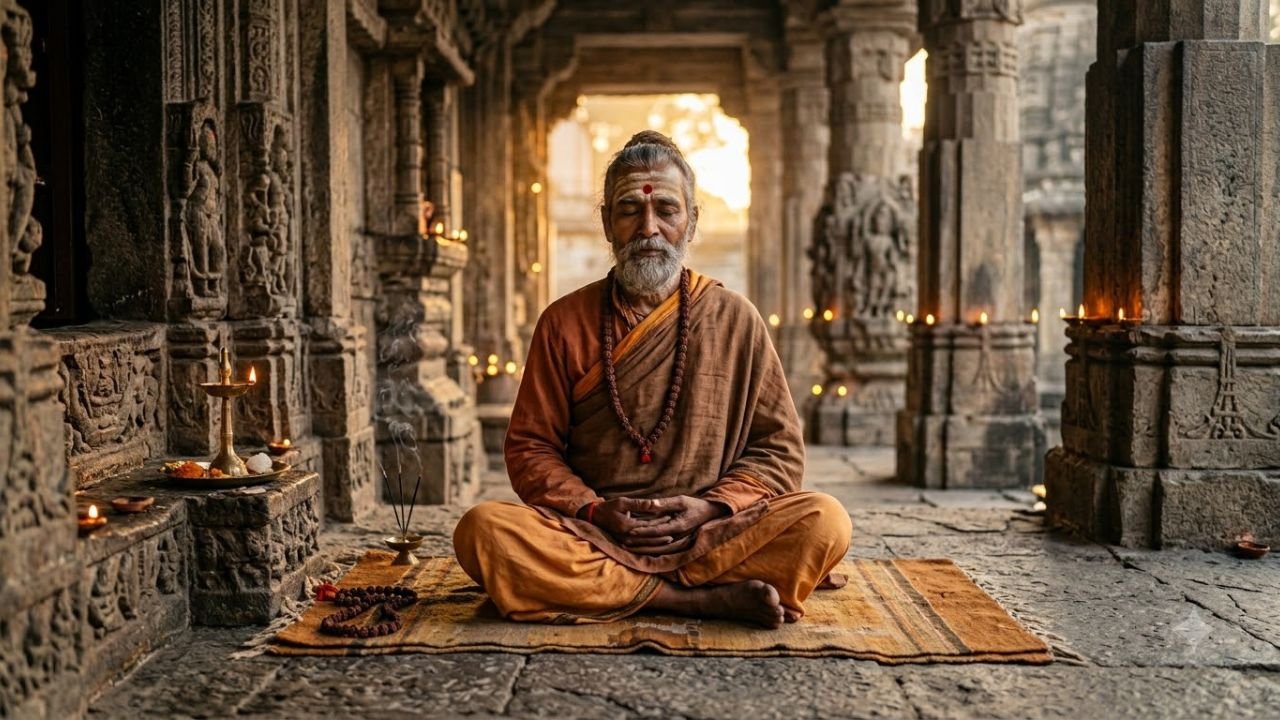
Meditation
Developing concentration and observing the mind.
Mantra
Repeating traditional sacred sounds or mantras as instructed.
Shiva Worship
Cultivating devotion and contemplation associated with Shiva.
Guru Bhakti
Maintaining respect and receptivity toward one’s spiritual teacher.
Detachment
Learning not to become excessively controlled by possessions, fear, status, or social approval.
Self-Observation
Examining one’s own reactions, attachments, fears, and habits.
The specific practices should be understood within their particular lineage rather than copied indiscriminately.
The Importance of Discipline in Aghor Sadhana
Spiritual transformation does not normally come simply from learning unusual rituals.
Discipline is essential.
A sincere practitioner may focus on:
- Regular practice
- Self-control
- Patience
- Meditation
- Mantra
- Study
- Respect for the Guru
- Responsible conduct
The external appearance of a practitioner cannot by itself demonstrate spiritual attainment.
Long-term conduct and dedication provide much more meaningful context.
Is Aghor Sadhana Dangerous?
This question often arises because of sensational stories surrounding Aghori practices.
The answer depends heavily on what specific practice is being discussed.
Some advanced traditional practices may not be appropriate for beginners. This is one reason proper guidance is important.
A seeker should not experiment with unfamiliar rituals simply because they appear mysterious or powerful online.
Avoid practices involving physical danger, illegal activity, harmful substances, or deliberate harm to yourself or another person.
Spiritual exploration should not require abandoning basic safety and responsible judgment.
Common Misconceptions About Aghor
Misconception 1: Every Aghori Performs the Same Practices
Aghor traditions and practitioners can differ.
Misconception 2: Aghor Is Only About Cremation Grounds
Cremation grounds are strongly associated with popular images of Aghor, but the spiritual ideas are broader than one location or ritual.
Misconception 3: Every Aghori Has Supernatural Powers
Claims of supernatural abilities belong to religious beliefs and traditional stories. They should not automatically be treated as scientifically established facts. Aghor Sadhana Ka Asli Arth
Misconception 4: Aghor Means Black Magic
Aghor should not simply be equated with black magic.
Misconception 5: External Appearance Proves Spiritual Attainment
Clothing, ash, rudraksha, or unusual surroundings cannot by themselves establish the depth of someone’s spiritual practice.
Aghor Sadhana and Inner Transformation
The most useful way to understand Aghor Sadhana Ka Asli Arth is to look at the idea of inner transformation.
A practitioner may gradually work toward:
Greater Fearlessness
Facing difficult thoughts without immediately running away.
Greater Awareness
Observing thoughts and emotions instead of automatically reacting to them.
Less Attachment
Understanding that possessions, status, and circumstances are temporary.
Greater Humility
Recognizing that spiritual learning is a long journey.
Greater Discipline
Continuing practice even when motivation changes.
These qualities provide a practical way to understand spiritual development without relying only on extraordinary stories.
How Beginners Can Study Aghor Responsibly
If you are new to Aghor, begin with learning rather than experimenting.
Read about:
- The history and philosophy of Aghor.
- Shiva-oriented spiritual traditions.
- Guru-Shishya traditions.
- Mantra and meditation.
- The concept of detachment.
- Impermanence and contemplation of death.
- Different interpretations of Tantra.
When you encounter an unusual claim, ask whether it is:
- A traditional belief
- A personal experience
- A symbolic teaching
- A historical claim
- A scientifically established fact
This simple distinction can make spiritual research much clearer.
Aghor Sadhana: The Deeper Message
At its heart, the idea of Aghor can be approached as a challenge to unnecessary fear and rigid mental divisions.
Instead of asking only:
“What unusual thing does an Aghori do?”
a deeper question is:
“What is the spiritual purpose behind the practice?”
This change in perspective can help people understand Aghor with greater depth and less sensationalism.
The Aghori Rudra Maharaj website currently features articles such as Aghor Tantra Ka Rahasya, Tantra Mantra Ka Rahasya, and Tantra Sadhana Kya Hoti Hai, reflecting the site’s focus on explaining these subjects through spiritual and traditional themes. Aghor Sadhana Ka Asli Arth
Conclusion
Aghor Sadhana Ka Asli Arth is much deeper than the mysterious images commonly associated with Aghoris.
Aghor can be explored as a spiritual approach concerned with fearlessness, detachment, awareness, impermanence, devotion, discipline, and transformation.
Its connection with Shiva, Tantra, Mantra, Guru guidance, and meditation varies across traditions and lineages. Therefore, it is important to avoid treating every story or practice as universal.
For anyone interested in Aghor Sadhana, the best starting point is sincere learning, responsible guidance, patience, and an effort to understand the philosophy behind the practices. Aghor Sadhana Ka Asli Arth
Aghor should not be judged only by external appearance or sensational stories. Understanding its deeper ideas can provide a more balanced picture of this distinctive spiritual tradition. Aghor Sadhana Ka Asli Arth
For further reading about Aghor, Tantra, Mantra and Sadhana, you can explore the official Aghori Rudra Maharaj website.
Aghori Rudra Maharaj
🌐 Website: https://www.aghorirudramaharaj.info/
📞 Call / WhatsApp: +91-7357771057
📧 Email: info@aghorirudramaharaj.info
Aghor Sadhana Ka Asli Arth | Meaning, Beliefs & Spiritual Path
Discover Aghor Sadhana Ka Asli Arth and understand Aghor spirituality, Shiva devotion, Tantra, Guru guidance, detachment, fearlessness, and inner transformation.







Leave a Reply