
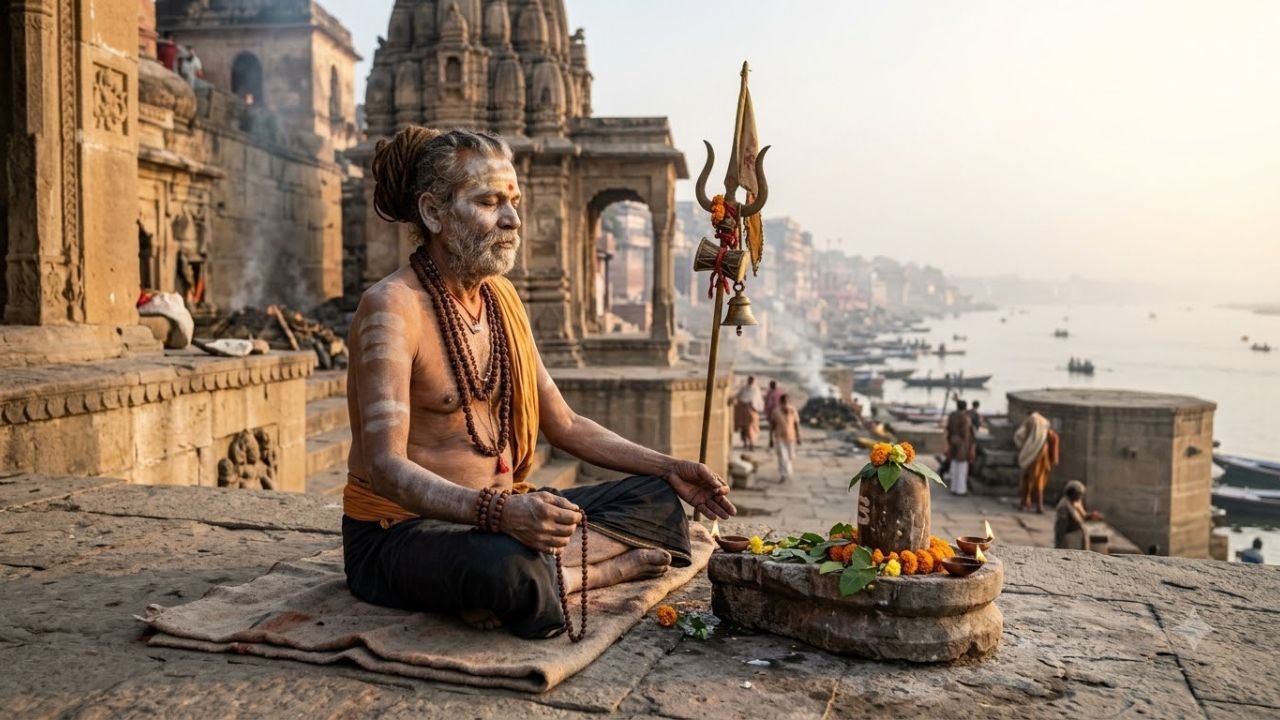
Understanding the Life of an Aghori
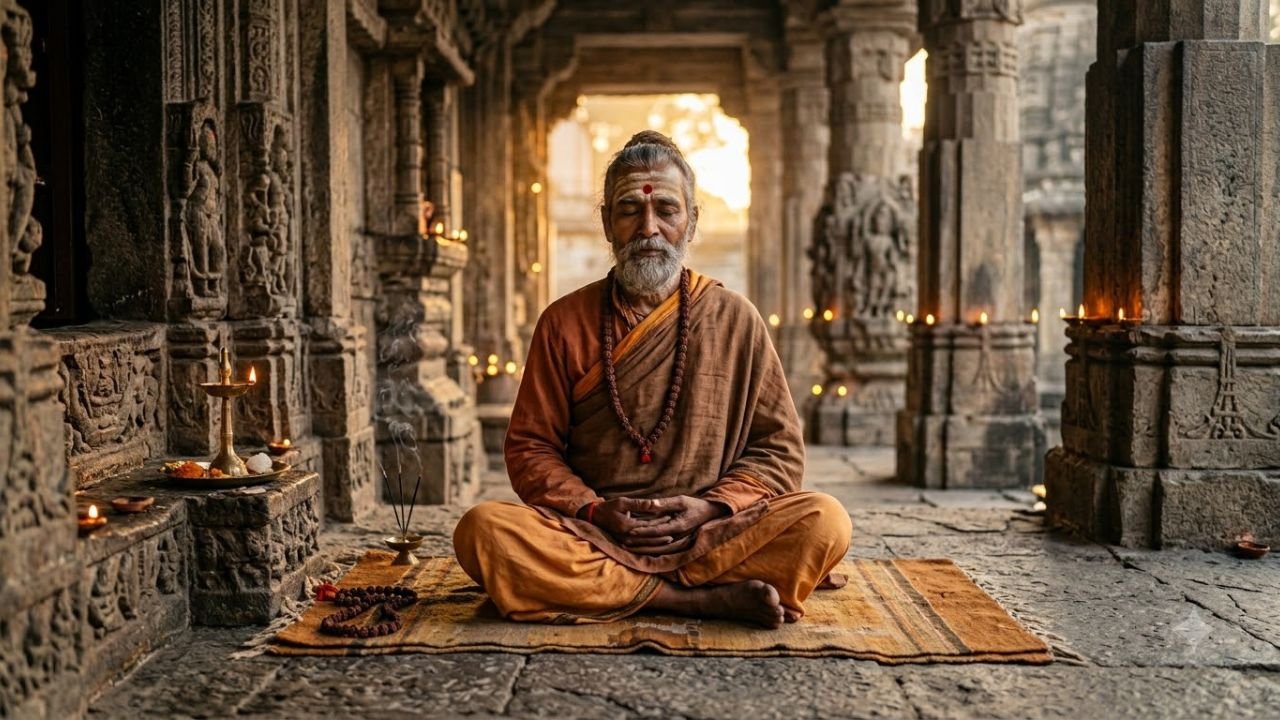
Aghori Ka Jeevan Kaisa Hota Hai is a question that attracts the curiosity of many people interested in Indian spirituality, Shiva worship, Tantra, meditation, and ascetic traditions.
When people hear the word Aghori, they often imagine cremation grounds, sacred ash, long meditation, rudraksha malas, skull imagery, and mysterious spiritual practices. Some of these images have a basis in descriptions of Aghori ascetic traditions, but they do not tell the whole story.
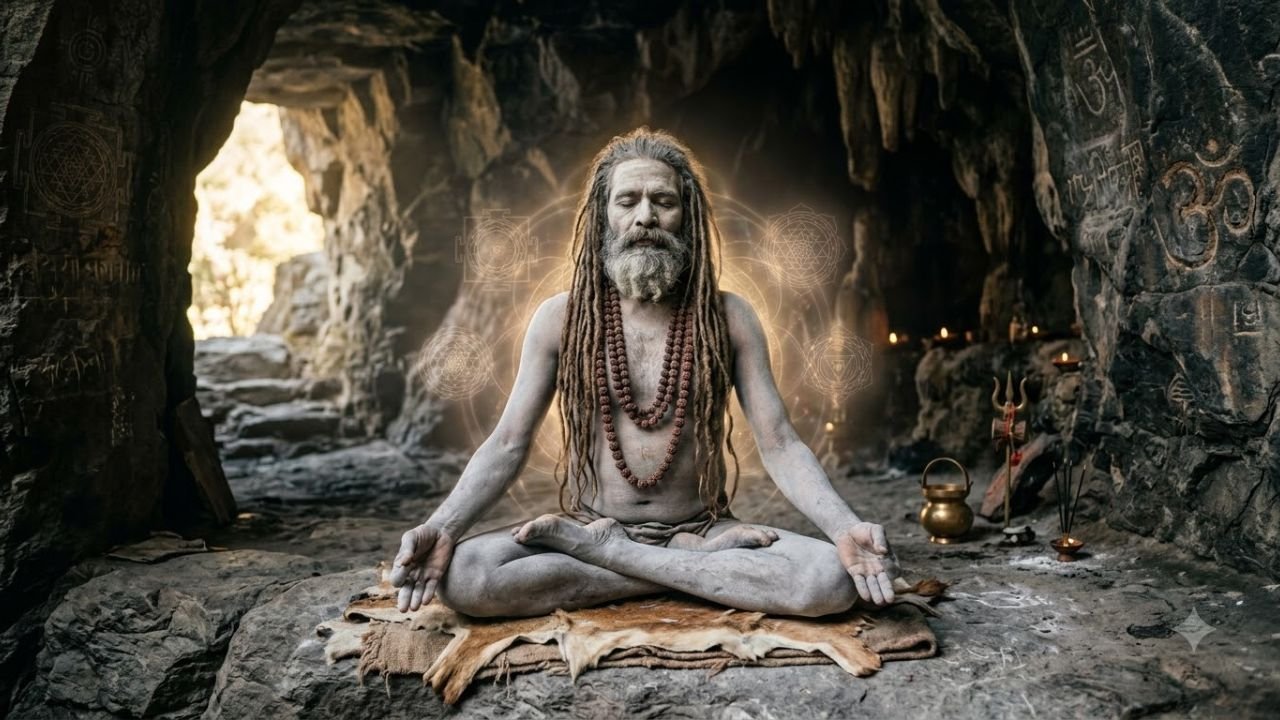
Aghori Ka Jeevan Kaisa Hota Hai Aghoris are associated with a Shaivite ascetic tradition, and historical and anthropological sources describe practices connected with cremation grounds, death, ritual purity, and the deliberate crossing of certain social boundaries.
At the same time, Aghor should not be understood only through sensational stories. The tradition has philosophical ideas concerning fear, attachment, impermanence, spiritual discipline, and the relationship between the individual and the Divine.
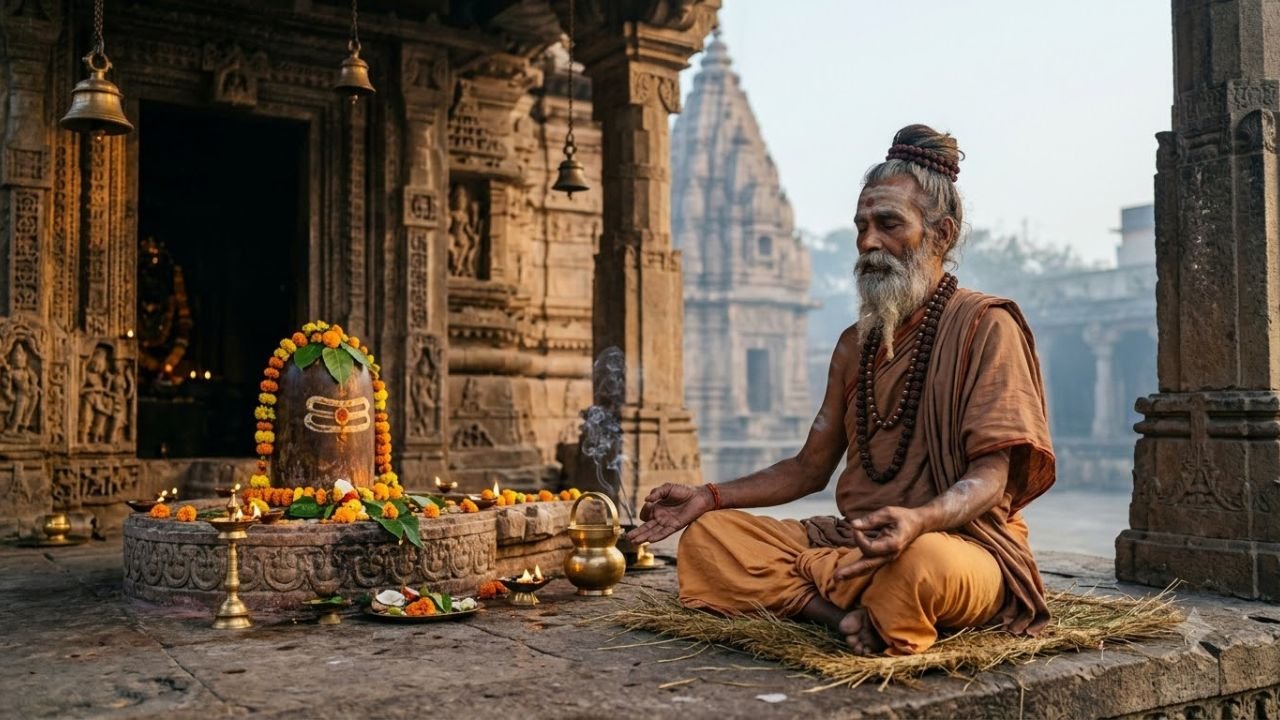
This article explains what Aghori life can involve, why cremation grounds have significance, the role of Guru and Sadhana, common misconceptions, and how beginners can understand the Aghor path responsibly. Aghori Ka Jeevan Kaisa Hota Hai
Who Is an Aghori?
An Aghori is traditionally understood as an ascetic practitioner associated with an Aghor-oriented Shaivite tradition.
Aghori ascetics are historically connected with practices that challenge conventional ideas of purity and impurity. Academic sources document the use of human skulls as ritual vessels and describe the importance of cremation-ground practices in the tradition. Aghori Ka Jeevan Kaisa Hota Hai
However, it is important not to assume that every person who identifies with Aghor follows exactly the same lifestyle.
Different practitioners, teachers, and lineages may emphasize different forms of spiritual discipline.
The Aghori Rudra Maharaj website likewise presents Aghor through several related subjects, including Aghor Marg, Guru Bhakti, Tantra, Sadhana, spiritual experience, and daily routine.
Aghori Ka Jeevan Kaisa Hota Hai?
The life of an Aghori is generally associated with ascetic discipline, spiritual practice, detachment, and confrontation with things that ordinary society often avoids.
For some practitioners, this may involve spending significant time in places associated with death and cremation. For others, spiritual practice may involve meditation, mantra, Shiva worship, Guru guidance, or service. Aghori Ka Jeevan Kaisa Hota Hai
Therefore, there is no single daily routine that accurately describes every Aghori.
1. A Life of Renunciation
Aghori asceticism can involve reducing attachment to ordinary material life.
Renunciation may mean stepping away from:
- Excessive attachment to possessions
- Social status
- Comfort
- Fame
- Conventional expectations
- Personal desires
The purpose is not necessarily to reject life itself.
Instead, renunciation can be understood as an attempt to reduce the power that attachment has over the mind.
Why Detachment Matters
Human beings often identify themselves with their possessions, appearance, relationships, occupation, and social position.
An ascetic path challenges these attachments.
The practitioner attempts to understand what remains when these external identities become less important.
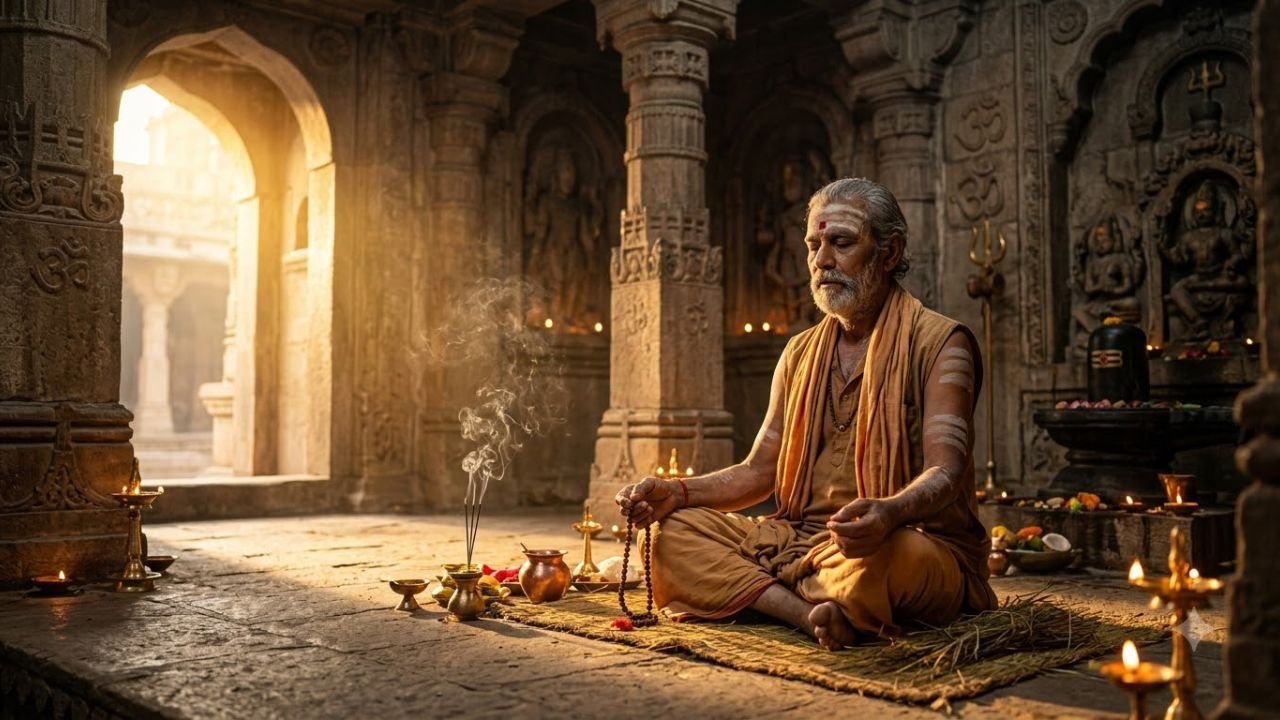
2. Connection With Shiva
Aghor is strongly associated with Shaivite spirituality and Shiva.
Shiva is traditionally associated with meditation, asceticism, transformation, dissolution, and transcendence.
For an Aghor practitioner, Shiva can represent a spiritual reality that is not limited by ordinary ideas of beauty, status, purity, or social convention. Aghori Ka Jeevan Kaisa Hota Hai
This connection helps explain why Aghor is often discussed alongside meditation, mantra, Tantra, and spiritual transformation.
3. Cremation Grounds and Aghori Life
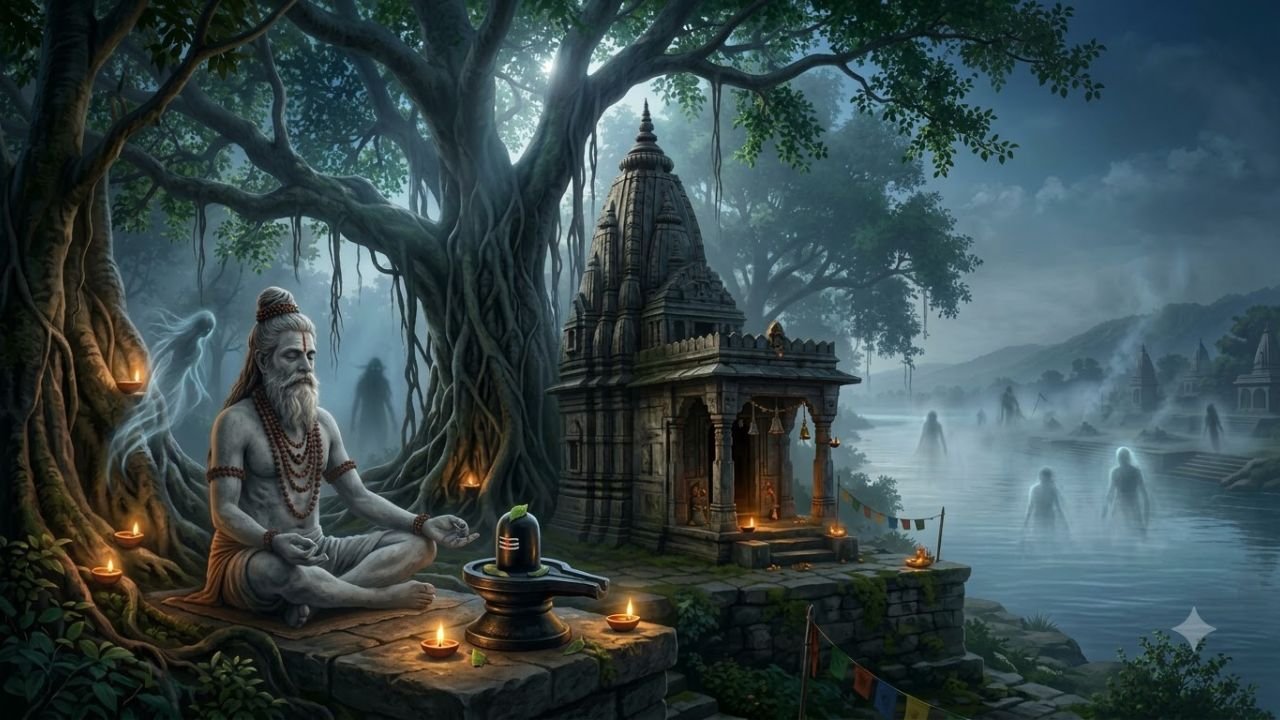
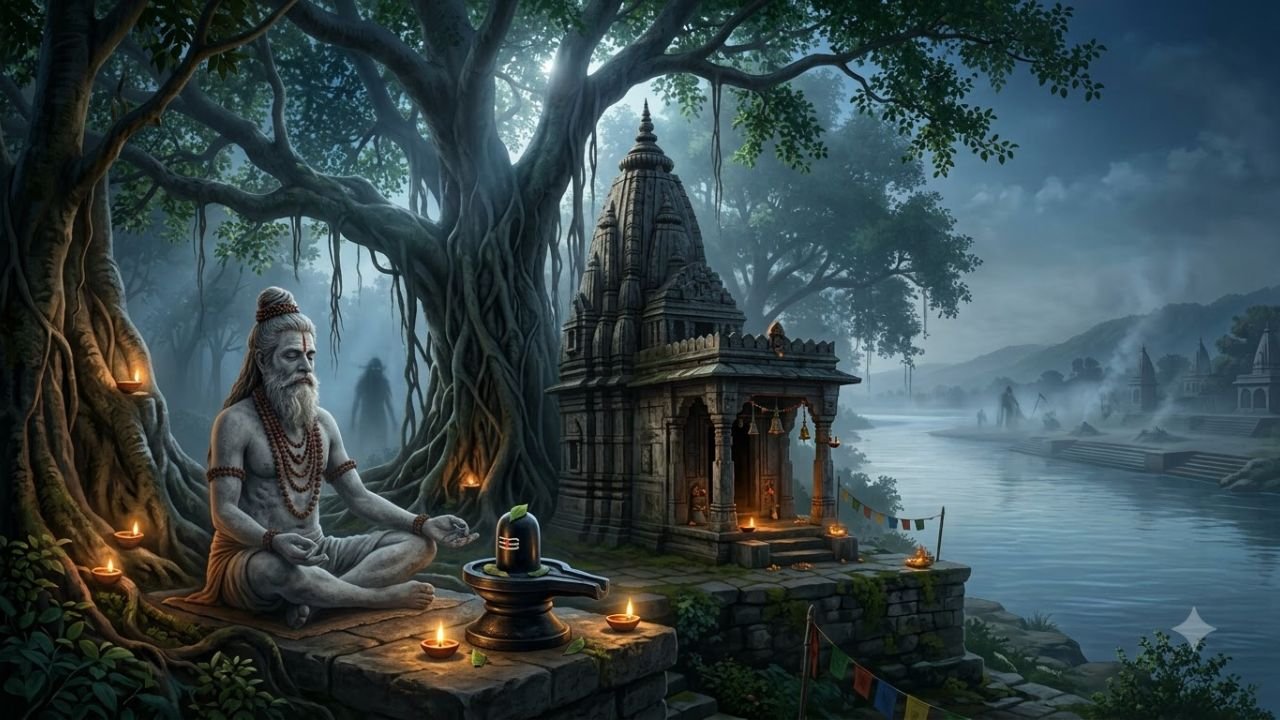
Perhaps the most famous aspect of Aghori life is the association with cremation grounds.
Historical and scholarly sources describe Aghori ascetics as living or practicing in cremation-ground environments and using the presence of death as part of their spiritual discipline. Aghori Ka Jeevan Kaisa Hota Hai
But why would a spiritual practitioner choose such an environment?
One important interpretation is contemplation of impermanence.
A cremation ground makes the temporary nature of the physical body impossible to ignore.
It reminds the practitioner that:
- Life is temporary.
- The physical body changes.
- Possessions cannot be taken beyond death.
- Social status eventually disappears.
- Attachment to the body has limits.
This constant confrontation with mortality can become a powerful form of spiritual reflection.
4. Facing Fear
The word Aghor is commonly interpreted in relation to being free from fear or terror.
Fear is a major part of ordinary human psychology.
People fear:
- Death
- Darkness
- Disease
- Social rejection
- Loss
- Uncertainty
- The unknown
Aghor-oriented practice is often described as confronting such fears rather than allowing them to control the mind.
Fearlessness Does Not Mean Recklessness
It is important to understand this distinction.
Fearlessness does not mean deliberately putting oneself in unnecessary danger.
A responsible spiritual approach recognizes genuine physical risks while working on psychological fear, attachment, and aversion.
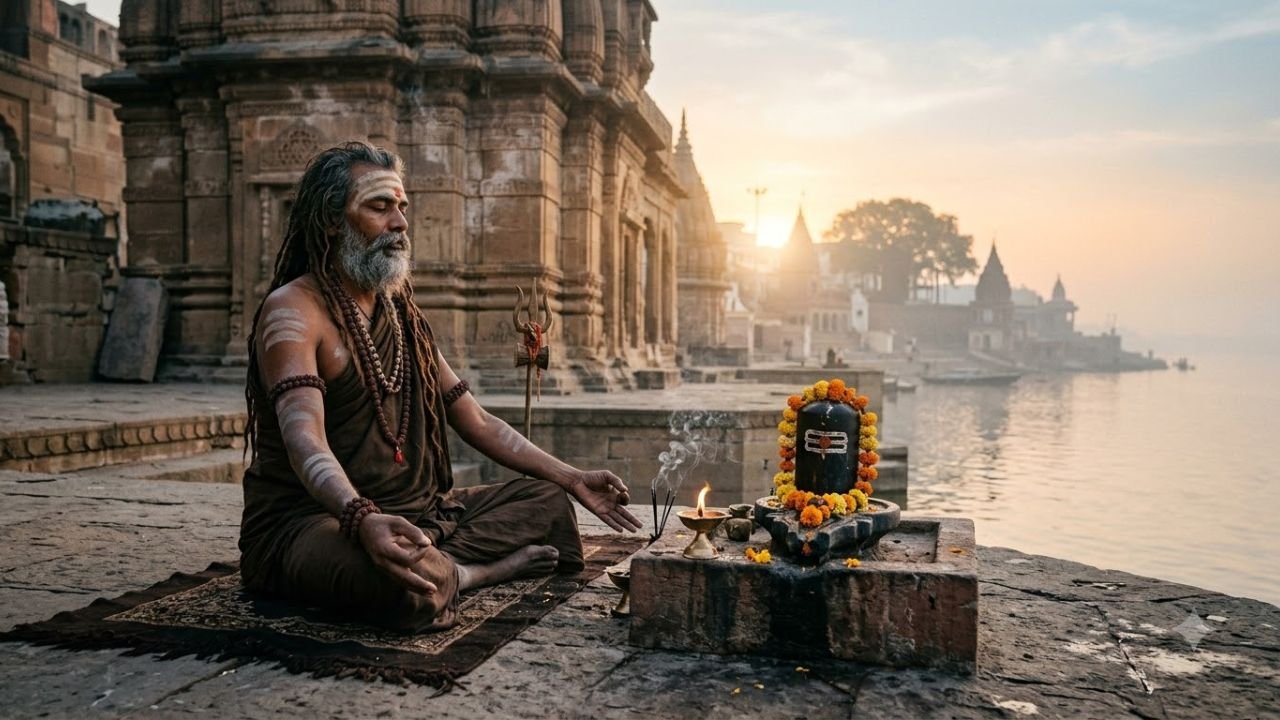
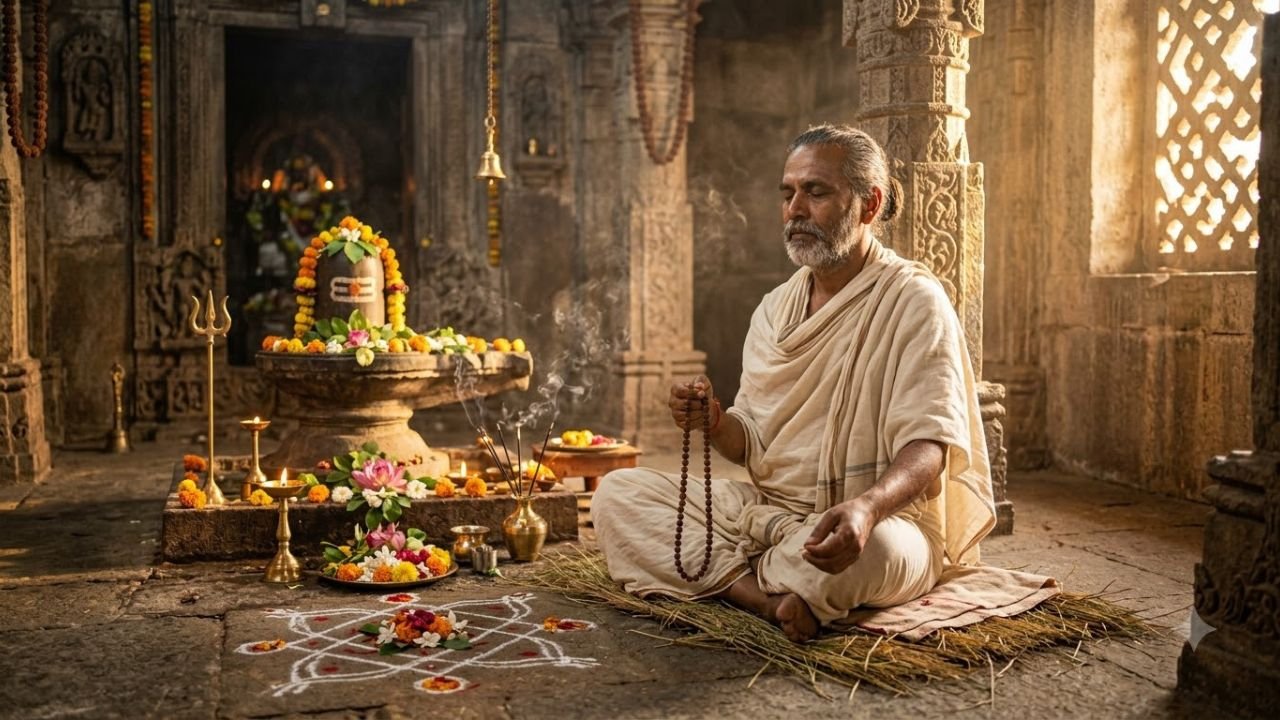
5. Meditation and Sadhana
Sadhana means disciplined spiritual practice.
Depending on the tradition and practitioner, an Aghori’s spiritual discipline may involve:
- Meditation
- Mantra repetition
- Shiva worship
- Contemplation
- Guru Bhakti
- Self-observation
- Tantric practices
- Ascetic discipline
The exact practice depends on the lineage and teacher.
The Aghori Rudra Maharaj website currently includes dedicated material on Aghori Sadhana, Sadhana Ka Rahasya, and Aghori Daily Routine, reflecting these themes.
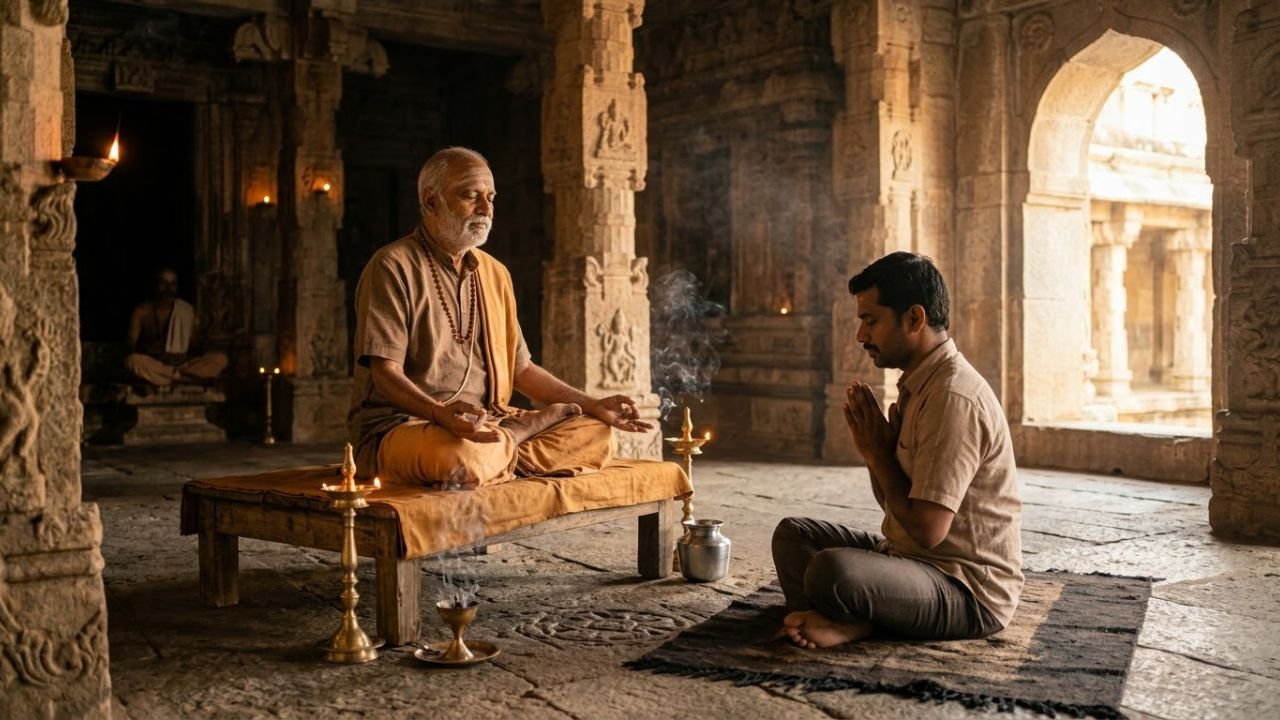
6. The Importance of the Guru
The Guru-Sadhak relationship has an important place in many Indian spiritual traditions.
For specialized spiritual practices, a teacher can provide direction and help a practitioner understand:
- Mantra
- Meditation
- Discipline
- Traditional practices
- Spiritual experiences
- Appropriate conduct
A Guru may also help a seeker avoid confusing imagination, emotion, and expectation with spiritual realization.
For an Aghori practitioner, Guru guidance can therefore be an important part of maintaining a disciplined path.
7. Guru Bhakti
Guru Bhakti means devotion, respect, and dedication toward one’s spiritual teacher.
It is not simply about outward worship.
It can also involve:
- Listening carefully
- Following appropriate discipline
- Accepting correction
- Practicing sincerely
- Remaining humble
- Respecting the spiritual tradition
The Aghori Rudra Maharaj website specifically features Guru Bhakti among its current Aghor-related subjects.
8. Aghori and the Idea of Purity
One of the most distinctive philosophical aspects of Aghor concerns the conventional division between pure and impure.
Ordinary society naturally creates categories:
- Clean and dirty
- Sacred and ordinary
- Attractive and unattractive
- Pure and impure
Aghor traditions have historically challenged some of these distinctions through practices that deliberately confront what society considers impure or frightening.
Scholarly research describes this as connected to an Aghori monistic philosophy in which social conventions concerning purity can be seen as obstacles on the path toward liberation. Aghori Ka Jeevan Kaisa Hota Hai
The point is not simply to shock society.
Rather, these practices can be interpreted as a radical way of examining attachment, disgust, fear, and dualistic thinking.
9. Why Skull Imagery Is Associated With Aghoris
Skull imagery is strongly associated with Aghori asceticism.
Academic literature documents the use of human skulls as ritual vessels among Aghori ascetics.
This imagery has a symbolic relationship with death and impermanence.
The skull reminds the practitioner that the physical body eventually changes and disappears.
It can therefore become a meditation object related to:
- Mortality
- Detachment
- Impermanence
- Ego
- The temporary nature of physical identity
It is important, however, not to assume that every Aghori uses skulls in exactly the same way.
10. What Does an Aghori Eat?
This is one of the most sensational questions about Aghoris.
Historical and academic sources document extreme practices associated with certain Aghori ascetics, including the ritual use of human remains and, in some accounts, consumption of human flesh. Aghori Ka Jeevan Kaisa Hota Hai
However, these practices should not be presented as a universal daily diet for every person associated with Aghor.
Modern Aghor communities and individual practitioners can have different approaches to food, spiritual discipline, healing, and social life. Anthropologist Ron Barrett’s work, for example, documents changes in Aghor communities and a significant emphasis on healing practices in some contemporary contexts. Aghori Ka Jeevan Kaisa Hota Hai
Therefore, sensational claims about what “every Aghori eats” are misleading.
11. Aghori Life and Service
Aghor should not be understood exclusively through death-related imagery.
Anthropological research has also examined Aghor-related healing and service activities, showing that contemporary expressions of the tradition can include concerns beyond cremation-ground asceticism. Aghori Ka Jeevan Kaisa Hota Hai
This is an important reminder that spiritual traditions can change and develop over time.
A practitioner may understand Aghor through meditation, healing, service, spiritual teaching, or other forms of practice.
Aghori Ka Daily Routine Kaisa Hota Hai?
There is no universally fixed Aghori timetable.
A practitioner’s routine can depend on:
- Lineage
- Guru
- Location
- Type of Sadhana
- Personal discipline
- Stage of spiritual practice
A routine may include some combination of:
Morning Practice
Meditation, prayer, mantra, or spiritual contemplation.
Daytime Discipline
Study, meditation, service, or personal spiritual practice.
Evening Practice
Prayer, mantra, meditation, or additional Sadhana.
Periods of Silence
Some ascetic practitioners may spend periods reducing ordinary conversation and social interaction.
Again, these are general possibilities rather than a universal schedule.
Aghori Life Is Not the Same as a Normal Household Life
An Aghori ascetic lifestyle can be very different from ordinary household life.
A householder generally has responsibilities involving:
- Family
- Employment
- Education
- Property
- Social relationships
An ascetic may intentionally reduce or leave behind many of these conventional responsibilities.
This difference is one reason why an Aghori lifestyle can appear mysterious to ordinary observers.
Common Misconceptions About Aghoris
“Every Aghori Lives in a Cremation Ground”
Not necessarily. Cremation-ground practice is historically important to the tradition, but individual lifestyles vary.
“Every Aghori Performs Black Magic”
Aghor and black magic should not simply be treated as identical concepts.
“Every Aghori Has Supernatural Powers”
Traditional beliefs and stories may attribute extraordinary abilities to ascetics, but such claims should be distinguished from scientifically established evidence. Aghori Ka Jeevan Kaisa Hota Hai
“Aghoris Are Only Interested in Death”
Death and impermanence are important themes, but Aghor also involves ideas of Shiva, detachment, meditation, spiritual discipline, and transformation. Aghori Ka Jeevan Kaisa Hota Hai
“An Aghori Can Be Identified by Appearance Alone”
External appearance does not provide a complete picture of someone’s spiritual practice.
What Is the Real Purpose of Aghori Life?
The deeper purpose can be understood through several themes:
Fearlessness
Learning to face fear rather than being controlled by it.
Detachment
Reducing dependence on possessions and social identity.
Awareness
Observing the mind and its reactions.
Acceptance
Confronting realities that people naturally avoid.
Spiritual Discipline
Maintaining regular Sadhana and following appropriate guidance.
Transformation
Using spiritual practice to change one’s relationship with fear, ego, attachment, and mortality.
How Should Beginners Learn About Aghori Life?
If you are interested in the Aghor tradition, begin with study rather than imitation.
Read about its history, philosophy, Shaivite connections, Guru traditions, meditation, Tantra, and concepts of impermanence.
Do not attempt dangerous or unfamiliar practices simply because they appear mysterious online.
Advanced spiritual practices should be approached only with appropriate traditional guidance and basic safety.
A balanced approach also means distinguishing between:
- Historical evidence
- Religious belief
- Traditional stories
- Individual experiences
- Modern interpretations
This makes it easier to understand Aghor without sensationalism.
Conclusion: Aghori Ka Jeevan Kaisa Hota Hai?
So, Aghori Ka Jeevan Kaisa Hota Hai?
There is no single lifestyle that describes every Aghori. Aghor is a Shaivite ascetic tradition with a history of practices involving renunciation, meditation, cremation-ground contemplation, ritual engagement with death, and challenges to conventional ideas of purity and impurity. Aghori Ka Jeevan Kaisa Hota Hai
For many people, the most important ideas behind Aghor are not the unusual external practices but the deeper questions they raise:
Can a person overcome unnecessary fear?
Can attachment to the ego and material identity be reduced?
Can death be contemplated without constant fear?
Can spiritual discipline transform the way a person sees life?
These questions help explain why Aghor remains a subject of interest within Indian spirituality.
For readers who want to explore Aghor, Guru Bhakti, Tantra, Sadhana, and spiritual experiences, the official Aghori Rudra Maharaj website contains related articles and topics. Aghori Ka Jeevan Kaisa Hota Hai
Aghori Rudra Maharaj
🌐 Website: Aghori Rudra Maharaj Official Website
📞 Call / WhatsApp: +91-7357771057
📧 Email: info@aghorirudramaharaj.info
Aghori Ka Jeevan Kaisa Hota Hai? | Aghori Life & Sadhana
Learn Aghori Ka Jeevan Kaisa Hota Hai and explore Aghori lifestyle, Shiva devotion, Sadhana, Guru guidance, cremation-ground traditions, detachment, and spiritual discipline.


Leave a Reply