
Meaning, Importance, Samagri, Rituals and Benefits
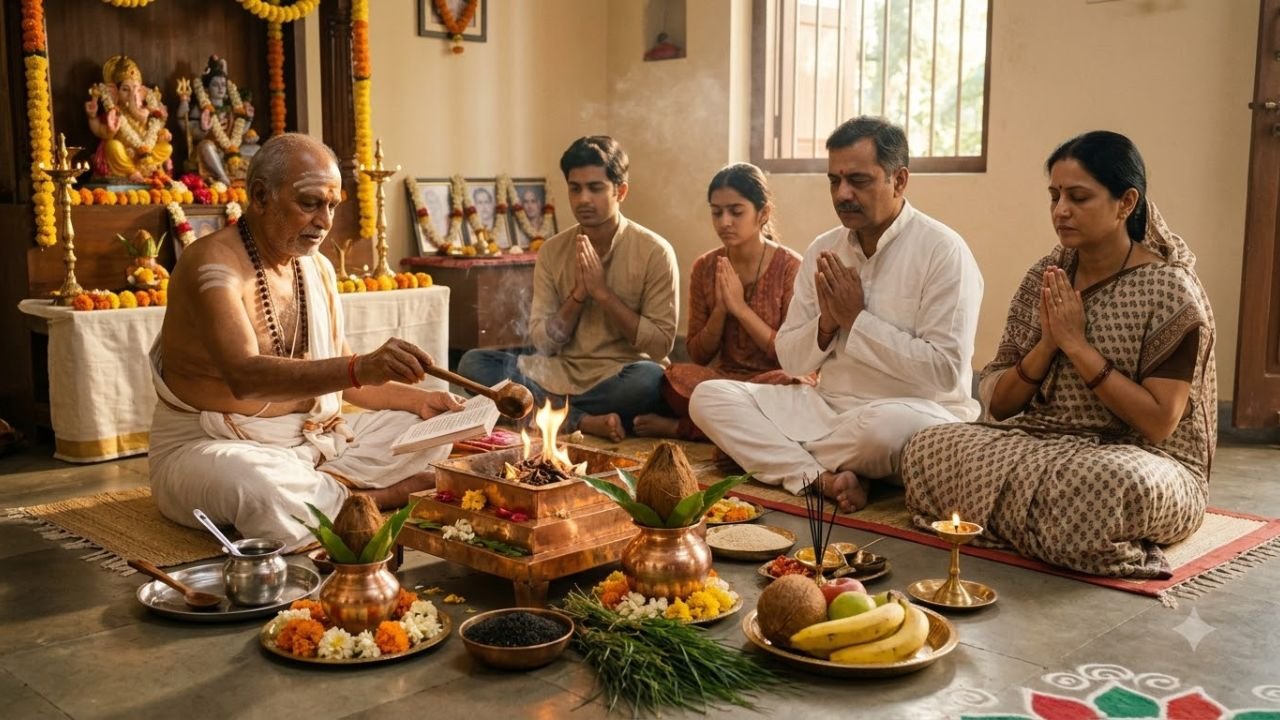
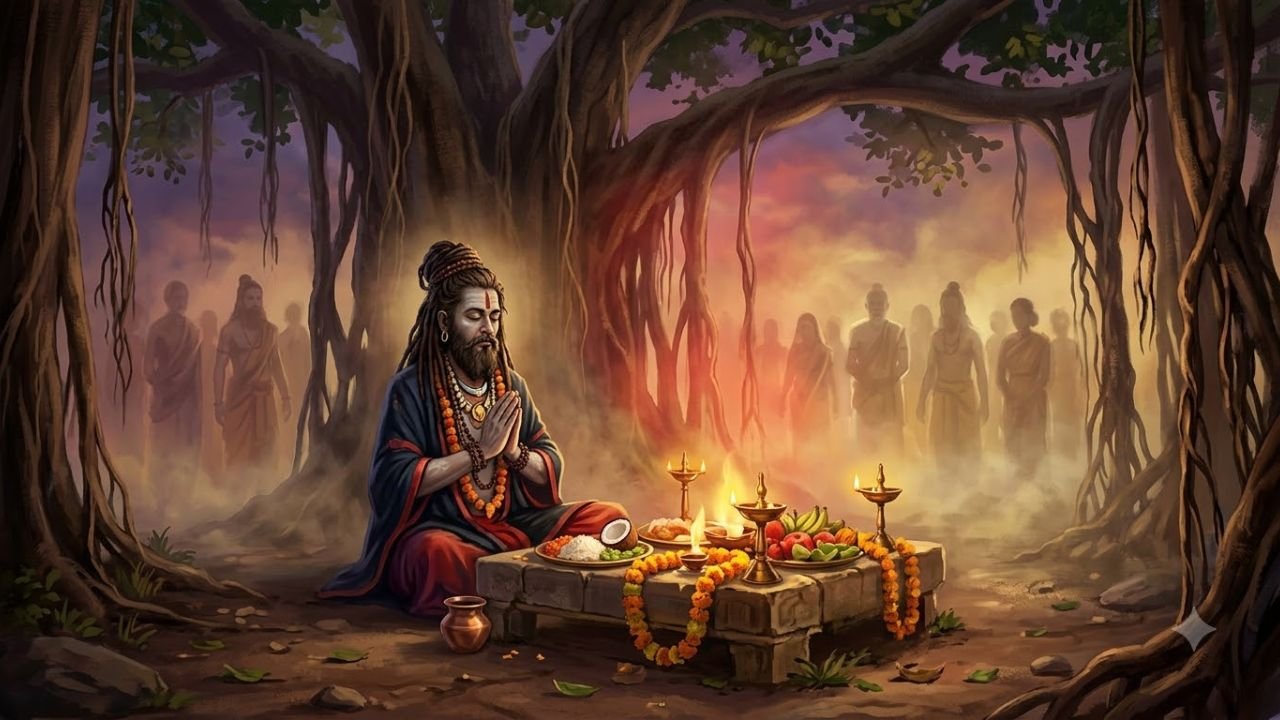
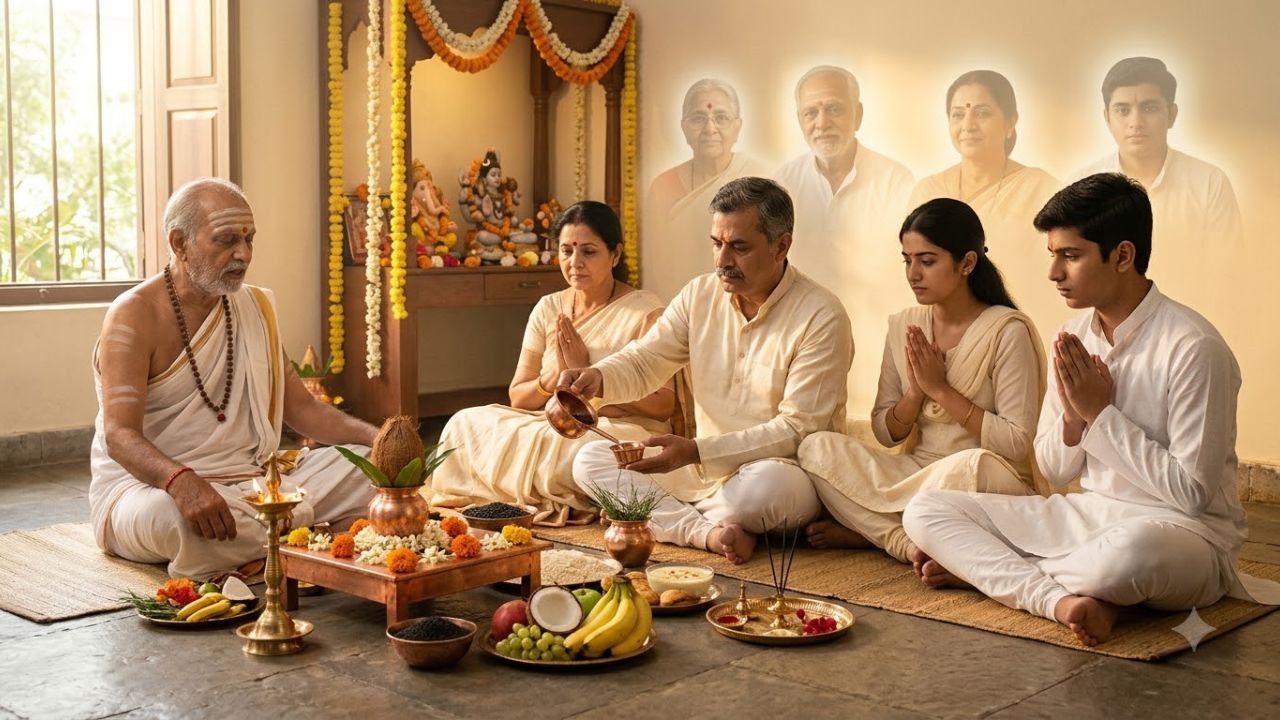
Pitru Shanti Puja Vidhi In Hindu traditions, ancestors are remembered and honoured through various prayers, rituals, and offerings. One such important practice is Pitru Shanti Puja. The word Pitru refers to ancestors, while Shanti means peace. Pitru Shanti Puja is traditionally performed to offer respect to departed family members and to pray for their peace and spiritual well-being.
Many families perform ancestor-related rituals during Pitru Paksha, Amavasya, death anniversaries, or other traditionally prescribed occasions. Some people also seek guidance when they believe that unresolved ancestral matters may be affecting family life.
It is important to understand these practices respectfully. Beliefs about ancestors, Pitru Dosha, and the effects of ancestral rituals vary among Hindu communities and traditions. Such beliefs are part of religious and cultural traditions and should not be presented as scientifically proven causes of problems in a person’s life. Pitru Shanti Puja Vidhi
This article explains Pitru Shanti Puja Vidhi, its traditional meaning, common puja samagri, preparation, basic ritual steps, suitable occasions, and important things to keep in mind.
What Is Pitru Shanti Puja?
Pitru Shanti Puja is a traditional Hindu religious practice performed in remembrance of deceased ancestors. The purpose is generally to express gratitude, offer prayers, perform traditional offerings, and seek peace for departed family members.
Different regions and priestly traditions may follow different procedures. In some cases, Pitru Shanti Puja may include Tarpan, Pind Daan, Shraddha, prayers to specific deities, charitable activities, and other rituals.
The exact procedure should therefore be determined according to the family tradition, location, and guidance of a knowledgeable priest. Pitru Shanti Puja Vidhi
The spiritual idea behind these practices is that remembering one’s ancestors is an expression of gratitude and respect. It also reminds families of their connection with previous generations.
Why Is Pitru Shanti Puja Performed?
There are several traditional reasons why families perform Pitru-related rituals.
1. To Remember Departed Ancestors
The most basic purpose is remembrance. Families use these rituals to honour parents, grandparents, great-grandparents, and other departed relatives.
The ritual provides an opportunity to remember their lives and express gratitude for what previous generations contributed to the family. Pitru Shanti Puja Vidhi
2. For Peace of the Ancestors
According to Hindu religious beliefs, prayers and offerings made for ancestors are considered a way of seeking their peace and well-being.
The interpretation of this belief differs between traditions, so families should follow the customs of their own lineage.
3. To Continue Family Traditions
Ancestor worship is an important part of many Hindu communities. Performing Shraddha and related rituals allows younger generations to understand and continue family customs. Pitru Shanti Puja Vidhi
4. In Connection With Pitru Dosha
Some Hindu astrological traditions use the term Pitru Dosha to describe certain planetary combinations in a birth chart and associate them with ancestral themes.
People sometimes perform Pitru Shanti rituals after consulting a priest or astrologer who follows this tradition.
However, Pitru Dosha is an astrological and religious concept, not a scientifically established diagnosis. Family problems should not automatically be attributed to it.
When Is Pitru Shanti Puja Performed?
The appropriate date depends on the purpose of the ritual and the family’s tradition.
Pitru Paksha
Pitru Paksha is a traditional period dedicated to remembering and honouring ancestors. Many Hindu families perform Shraddha, Tarpan, and other ancestor-related rituals during this period. Pitru Shanti Puja Vidhi
The exact dates change every year according to the Hindu lunar calendar.
Amavasya
Amavasya, the new moon day, is traditionally considered significant for certain Pitru-related offerings. Some families perform Tarpan or other prayers on Amavasya.
Death Anniversary
Families may perform Shraddha or remembrance rituals on the death anniversary, according to their tradition.
Special Family Circumstances
If a family believes that an ancestral ritual is required for a particular reason, they may consult a knowledgeable priest to determine the appropriate procedure and date. Pitru Shanti Puja Vidhi
It is better to confirm the date locally because Hindu calendars and regional customs can differ.
Pitru Shanti Puja Samagri
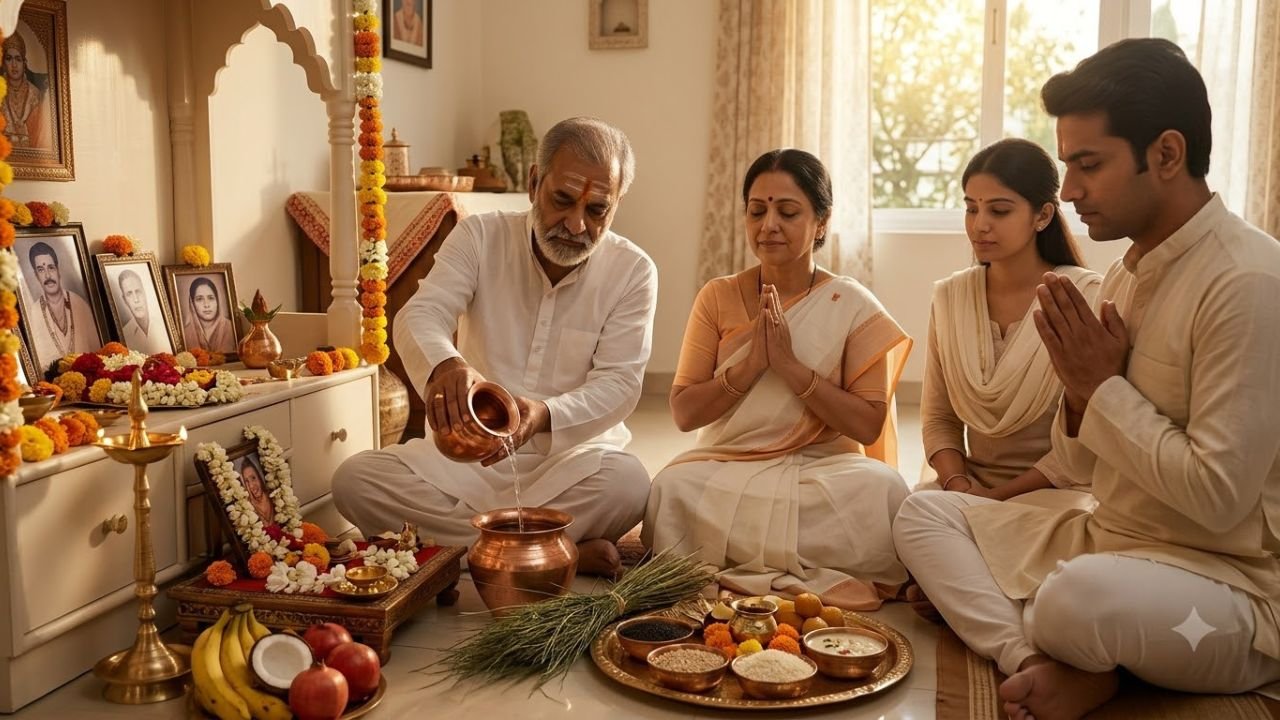
The required materials can vary depending on the specific ritual. Common items may include:
- Clean puja cloth
- Kusha or darbha grass
- Til, especially black sesame
- Barley or rice
- Water
- Flowers
- Fruits
- Milk
- Ghee
- Honey
- Tulsi leaves, where appropriate
- Sandalwood
- Incense
- Diya
- Cotton wicks
- Sacred thread
- Pind materials such as cooked rice, depending on the ritual
- A clean copper or brass vessel
- Food prepared according to the family’s tradition
- Items required by the priest for specific rites
Not every ritual requires every item. Before purchasing anything, ask the priest performing the ceremony for the exact list.
Pitru Shanti Puja Vidhi: Step-by-Step
The exact Pitru Shanti Puja Vidhi differs according to tradition. The following is a general overview rather than a substitute for a priest’s specific instructions.
Step 1: Clean the Puja Area
The family should clean the place where the ritual will take place. The atmosphere should be peaceful and respectful.
A simple puja space can be prepared using a clean cloth and the necessary ritual materials.
Step 2: Personal Preparation
Participants traditionally bathe and wear clean clothes before beginning the ceremony.
The purpose is to approach the ritual with cleanliness, seriousness, and a calm mind.
Step 3: Sankalp
The priest may guide the family through a Sankalp, in which the purpose of the ritual is formally stated.
The Sankalp may include information about the person or ancestors being remembered and the intention behind performing the puja. Pitru Shanti Puja Vidhi
Step 4: Invocation of Deities
Depending on the tradition, prayers may first be offered to Lord Ganesha and other deities.
This creates the traditional devotional setting for the ceremony.
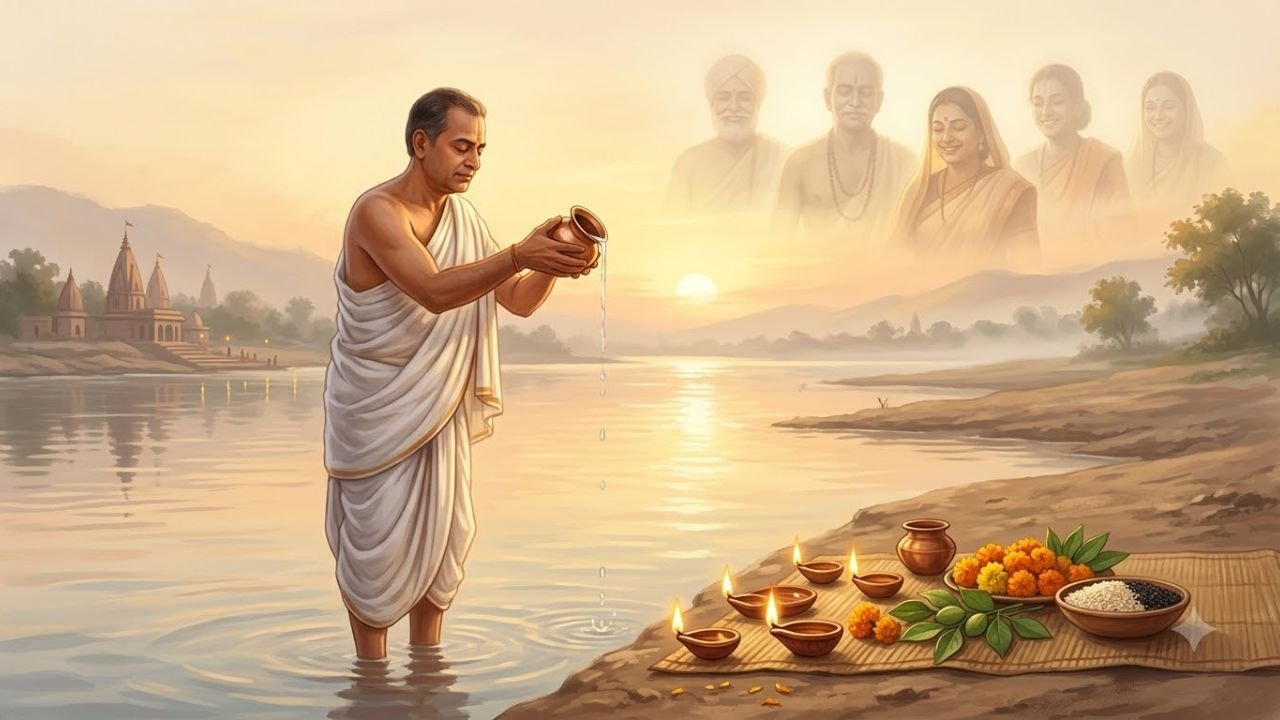
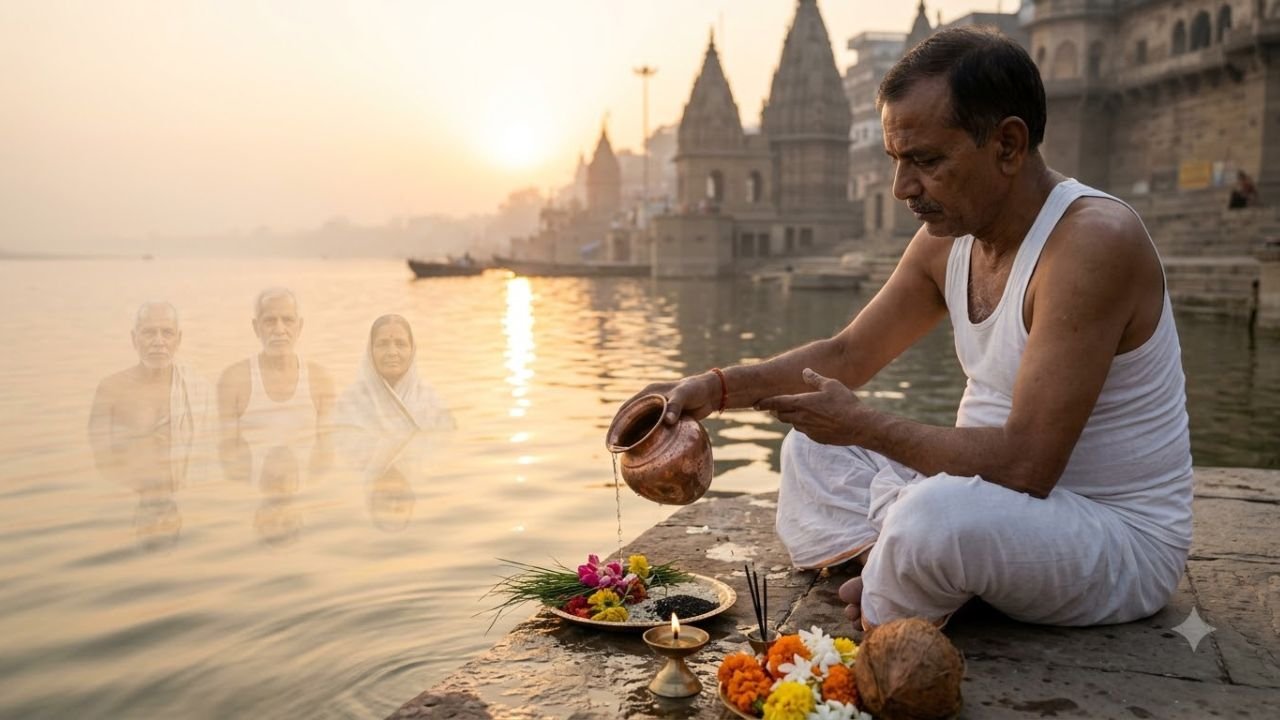
Step 5: Tarpan
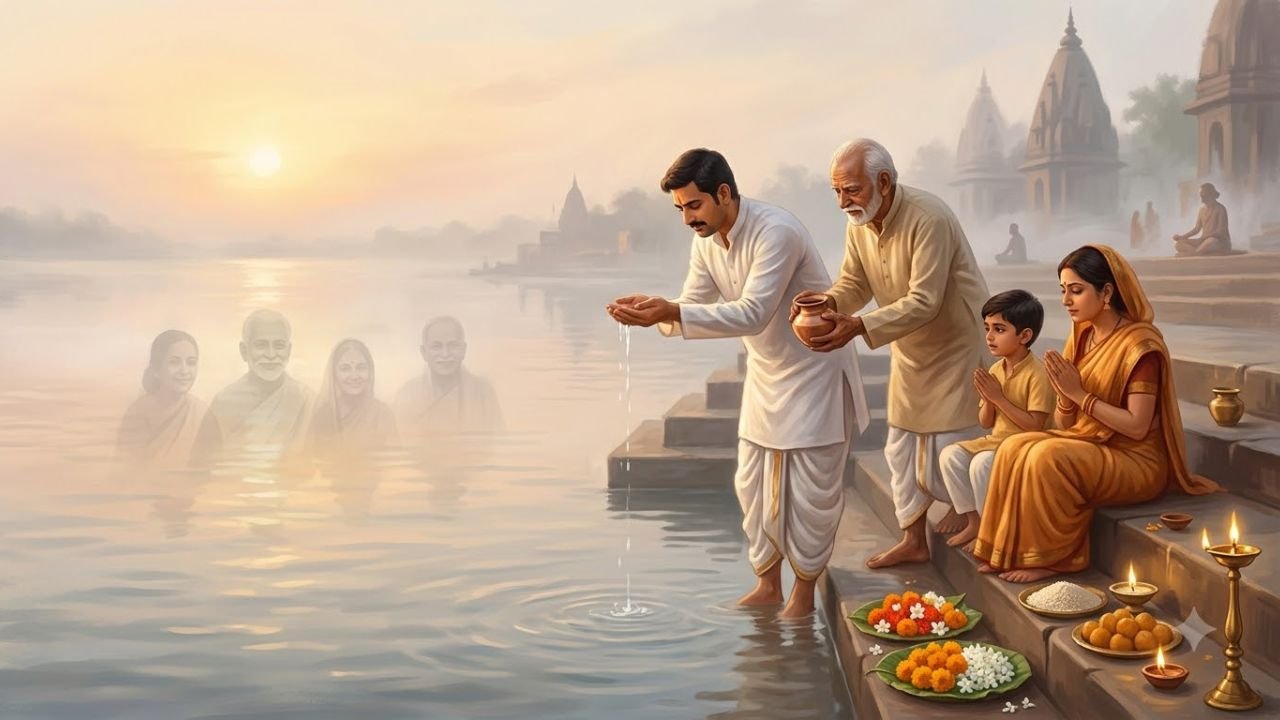
Tarpan is a traditional offering involving water and other prescribed materials. It is performed as an act of remembrance and respect toward ancestors.
The exact procedure, mantras, direction, and sequence should be learned from a qualified priest because they vary between traditions.
Step 6: Pind Daan
In some Pitru-related ceremonies, Pind Daan is performed using offerings traditionally prepared from rice and other prescribed ingredients.
Pind Daan is particularly associated with ancestral rites and places such as Gaya, although similar practices may be performed elsewhere according to tradition. Pitru Shanti Puja Vidhi
It should be performed according to the specific customs of the ceremony.
Step 7: Mantra and Prayers
The priest may recite Sanskrit mantras and prayers associated with ancestors and the relevant deities.
Family members may participate by repeating prayers or following the priest’s instructions.
Step 8: Offering Food
Food offerings may be prepared according to family tradition. In many Hindu practices, feeding Brahmins, guests, cows, birds, or people in need may also be associated with acts of charity and remembrance. Pitru Shanti Puja Vidhi
The specific practice varies significantly by region and community.
Step 9: Charity and Daan
Charity is often included in traditional religious observances.
A family may donate food, clothing, or other useful items to people in need. The emphasis should be on sincere giving rather than spending beyond one’s means. Pitru Shanti Puja Vidhi
Step 10: Final Prayer
The ceremony concludes with prayers for the peace of the ancestors and the well-being of the family.
Families may also take a moment to remember the departed person personally and express gratitude for their life.
Role of Tarpan in Pitru Shanti
Tarpan is one of the most familiar practices associated with ancestor remembrance.
In traditional Hindu belief, offerings of water and other materials are made as an expression of respect toward ancestors. The procedure can differ according to one’s Vedic or regional tradition.
Because the details of Tarpan are important within ritual practice, beginners should avoid copying random procedures from the internet. A knowledgeable priest can explain the appropriate method. Pitru Shanti Puja Vidhi
Role of Shraddha in Ancestor Worship
Shraddha is a broader Hindu tradition of remembering and honouring departed ancestors.
The word is associated with faith, sincerity, and respectful observance. Shraddha ceremonies may include offerings, prayers, food, and charity.
Pitru Shanti Puja and Shraddha can overlap in purpose, but they are not necessarily identical ceremonies. The names and procedures may vary between traditions. Pitru Shanti Puja Vidhi
What Is Pitru Dosha?
Pitru Dosha is a concept found in certain Hindu astrological traditions. It is traditionally associated with ancestral matters and specific planetary combinations in a horoscope.
Some practitioners believe that certain life difficulties may be connected with Pitru Dosha and recommend ancestor-related prayers or rituals.
However, these are matters of religious and astrological belief rather than scientifically established explanations for illness, financial problems, marriage difficulties, or other life events.
If someone chooses to perform a Pitru Shanti ritual because of an astrological interpretation, it should ideally be done after understanding what the ritual actually involves and without fear-based pressure. Pitru Shanti Puja Vidhi
Traditional Benefits of Pitru Shanti Puja
People may associate Pitru Shanti Puja with several spiritual and emotional benefits.
Sense of Gratitude
Remembering ancestors can encourage gratitude for previous generations.
Family Connection
Ancestor rituals can bring family members together and strengthen awareness of family history.
Emotional Peace
A respectful remembrance ceremony may help some people process grief and maintain a sense of connection with someone who has passed away. Pitru Shanti Puja Vidhi
Continuation of Tradition
Performing traditional rituals allows families to preserve cultural and religious practices for future generations.
Charity and Service
Many ceremonies include charitable acts, which can turn remembrance into positive action for others.
These are spiritual, cultural, and personal benefits. They should not be understood as guaranteed supernatural outcomes.
Important Rules and Precautions
When arranging Pitru Shanti Puja, keep the following points in mind:
- Follow your family or regional tradition.
- Confirm the date with a knowledgeable priest.
- Ask for the complete list of required samagri beforehand.
- Understand the purpose of each major ritual.
- Do not perform unfamiliar advanced rituals without guidance.
- Avoid anyone who uses fear to demand excessive money.
- Do not assume every family problem has an ancestral or supernatural cause.
- Keep practical and medical concerns separate from religious rituals.
- Perform charity according to your financial ability.
- Treat the ceremony as an act of respect rather than a transaction for guaranteed results.
Can Pitru Shanti Puja Be Performed at Home?
Some simple ancestor prayers and remembrance practices can be performed at home according to family tradition.
More elaborate ceremonies involving Tarpan, Pind Daan, specific Vedic mantras, or specialised procedures may require a priest.
If you are unsure about the correct procedure, consult a qualified priest who understands your family’s tradition rather than relying on a generic online ritual. Pitru Shanti Puja Vidhi
Frequently Asked Questions
How many days is Pitru Shanti Puja?
There is no single duration for every Pitru Shanti Puja. Some ceremonies may be completed in a few hours, while more elaborate observances can continue longer. The duration depends on the ritual and tradition.
Can Pitru Shanti Puja be done without a priest?
Simple prayers and remembrance can be performed personally, but traditional Vedic ceremonies involving specific mantras and procedures are often performed with the guidance of a priest. Pitru Shanti Puja Vidhi
Is Pitru Shanti Puja necessary for every family?
No. Religious customs vary between families and traditions. There is no universal requirement that every family must perform the same Pitru Shanti ritual.
What should I do if I cannot afford an elaborate puja?
A sincere prayer, remembrance, and an act of charity within your means can be meaningful. Religious practice should not force a family into financial hardship.
Does Pitru Shanti guarantee that family problems will disappear?
No guaranteed outcome can be promised. The ritual has religious and cultural significance, but practical problems should also be addressed through appropriate real-world steps.
Conclusion
Pitru Shanti Puja Vidhi is traditionally connected with remembrance, gratitude, prayer, and respect for departed ancestors. Practices such as Tarpan, Shraddha, Pind Daan, mantra recitation, and charity may form part of ancestor-related observances, depending on the family and regional tradition.
The most important part of the ceremony is a sincere attitude of respect and remembrance. Families should learn the appropriate procedure from a knowledgeable priest and avoid fear-based claims or promises of guaranteed results.
Honouring ancestors can also extend beyond ritual. Preserving family values, helping others, remembering the stories of previous generations, and living responsibly can be meaningful ways of carrying their legacy forward. Pitru Shanti Puja Vidhi
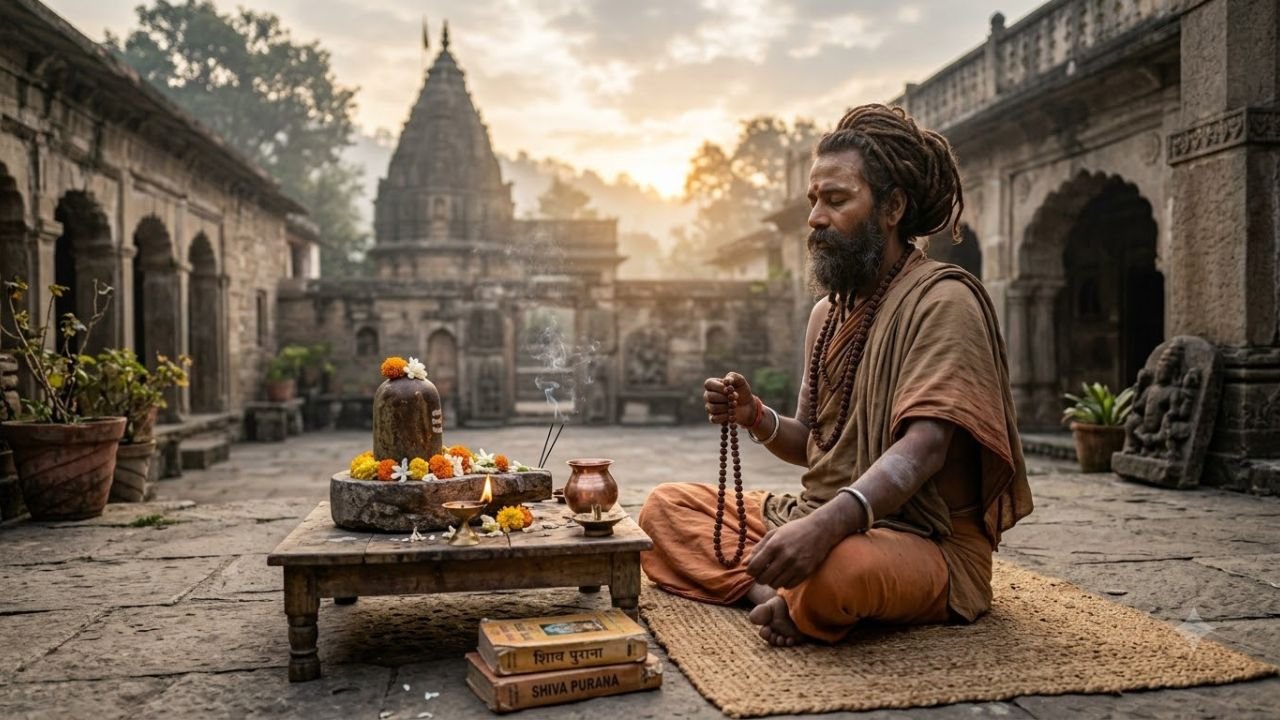
For more information about Hindu spirituality, traditional practices, and related spiritual subjects, you can visit the website of Aghori Rudra Maharaj.
Website: https://www.aghorirudramaharaj.info/
Call / WhatsApp: +91-7357771057
Email: info@aghorirudramaharaj.info

Leave a Reply